
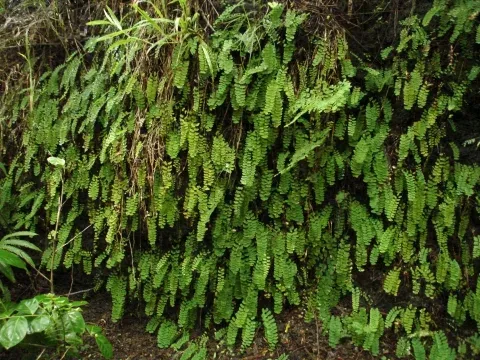
Moon fern
Pteris lunulata
The moon fern (Pteris lunulata) belongs to the Pteridaceae family and is recognized for its unique, delicate foliage structure. Originating from tropical and subtropical areas, this fern has adapted to thrive in understory conditions with high humidity and limited direct sunlight.
What the section contains
Moon fern
Optimal growth requires a stable environment with temperatures between 18°C and 24°C (64°F–75°F). Extreme fluctuations in temperature or cold drafts can cause significant stress to the plant and may lead to necrotic spots on the fronds.
Soil requirements involve a porous, well-draining substrate that retains moisture without becoming waterlogged. A mixture consisting of peat moss, pine bark, and coarse perlite is often considered the gold standard for maintaining root health in container-grown specimens.
Humidity is perhaps the most critical factor for Pteris lunulata. It flourishes in humidity levels above 65%. In agricultural settings or greenhouses, automated misting systems are recommended to ensure consistent moisture levels around the foliage during the growing season.
Regarding light, the moon fern requires filtered or indirect light. While it is shade-tolerant, it will exhibit better color and frond density in bright, diffused light rather than in deep darkness, which often leads to etiolation (stretching) of the stems.
Spider mites are the most persistent pests for this culture, especially in low-humidity environments. They cluster on the underside of the fronds, where they spin fine webbing and sap the plant's vitality, leading to discolored and wilted leaflets.
Scale insects present a significant challenge by attaching themselves to the petioles and stems. These pests are protected by a hard, waxy shell, which makes manual removal or contact-based insecticides necessary to eradicate the infestation effectively.
Root rot is the most common physiological disease associated with poor irrigation practices. When the soil remains saturated for extended periods, roots suffer from hypoxia, allowing opportunistic soil-borne fungi to invade and destroy the root system.
Leaf spot diseases, often caused by Cercospora or Colletotrichum species, can appear if the plant is frequently subjected to overhead watering that leaves the foliage wet for too long. These spots start as small lesions and can spread rapidly under humid conditions.
Effective management includes maintaining a rigorous sanitation schedule, which involves removing old or decaying fronds and ensuring proper air circulation within the growing area to discourage the development of fungal spores.