
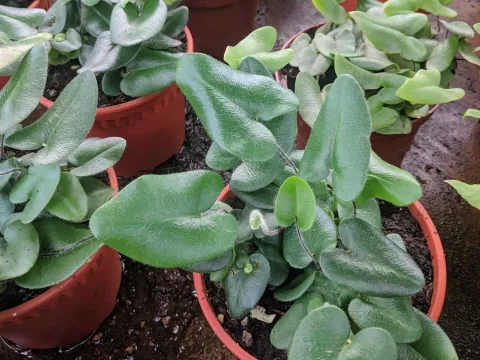
Hemionitis
Hemionitis
Hemionitis is a genus of ferns belonging to the Pteridaceae family. In their natural habitat, these plants are found in the tropical and subtropical regions of America and Asia, thriving in humid and shaded forest environments.
What the section contains
 Heart-leaf fern
Hemionitis cardiomorpha
Heart-leaf fern
Hemionitis cardiomorpha
 Heart-leaf fern
Hemionitis arifolia
Heart-leaf fern
Hemionitis arifolia
 Hemionitis chusana
Hemionitis chusana
Hemionitis chusana
 Hemionitis distans
Hemionitis doniana
Hemionitis doniana
Hemionitis distans
Hemionitis distans
Hemionitis doniana
Hemionitis doniana
 Hemionitis doryopteris
Hemionitis doryopteris
Hemionitis doryopteris
 Hemionitis elegans
Hemionitis kuhnii
Hemionitis kuhnii
Hemionitis elegans
Hemionitis elegans
Hemionitis kuhnii
Hemionitis kuhnii
 Hemionitis ludens
Hemionitis ludens
Hemionitis ludens
 Hemionitis michelii
Hemionitis michelii
Hemionitis michelii
 Hemionitis microphylla
Hemionitis microphylla
Hemionitis microphylla
 Hemionitis morla
Hemionitis morla
Hemionitis morla
 Hemionitis palmata
Hemionitis palmata
Hemionitis palmata
 Hemionitis pinnatifida
Hemionitis pinnatifida
Hemionitis pinnatifida
 Hemionitis pteridioides
Hemionitis pteridioides
Hemionitis pteridioides
 Hemionitis sieberi
Hemionitis sieberi
Hemionitis sieberi
 Hemionitis ternifolia
Hemionitis ternifolia
Hemionitis ternifolia
 Hemionitis triphylla
Hemionitis triphylla
Hemionitis triphylla
Hemionitis
For successful cultivation of Hemionitis, maintaining a stable temperature range between 18 and 24 degrees Celsius is critical. The plant is extremely sensitive to sudden temperature fluctuations and drafts, which can easily damage its delicate fronds.
This crop requires high air humidity, making the use of humidifiers or greenhouse conditions ideal. Irrigation must be regular without waterlogging the soil ball, as stagnant water significantly increases the risk of root rot.
The soil substrate for Hemionitis must provide excellent aeration and maintain a slightly acidic pH. It is recommended to use a mix based on leaf mold, peat, and charcoal to prevent the development of harmful pathogens.
The plant prefers diffused light, while direct sunlight causes severe burns on the foliage. Under low-light conditions, Hemionitis loses its decorative appeal and significantly slows down its vegetative growth rate.
Fungal diseases caused by excessive substrate moisture pose the greatest threat to Hemionitis. Root rot is particularly dangerous, as it often leads to the rapid loss of the entire plant if not detected early.
Among pests, scale insects and spider mites are the most common adversaries of this culture. Upon the first signs of infestation, immediate treatment with insecticides or acaricides is required alongside microclimate adjustments.
To prevent pest outbreaks, it is recommended to regularly inspect the underside of the leaves, where these pests typically hide. Maintaining plant hygiene, including the removal of dead or decaying fragments, substantially lowers the risk of infestation.
Irregular watering often causes leaf yellowing, which can be misidentified as a disease. It is essential to differentiate physiological disorders from infectious lesions to ensure the correct treatment plan is followed.
When using fertilizers, caution is advised as high salt concentrations in the soil can cause chemical burns to the root system. Only low-concentration liquid fertilizers designed for ornamental foliage plants should be used.