
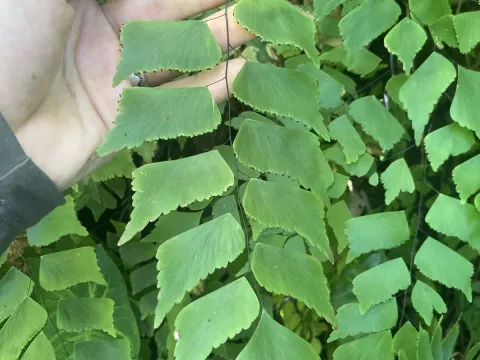
Adiantum trapeziforme
Adiantum trapeziforme
Adiantum trapeziforme, commonly known as the diamond maidenhair fern, belongs to the Pteridaceae family. It is native to tropical rainforests of Central and South America, where it thrives in shaded and humid environments.
What the section contains
Adiantum trapeziforme
This fern requires bright, indirect light to maintain its lush foliage. Direct sunlight can cause severe scorching of the delicate pinnae, significantly reducing the plant's aesthetic value.
Temperature requirements remain consistent throughout the year, ideally between 18°C and 24°C. The plant should be protected from cold drafts and sudden temperature fluctuations which often trigger leaf drop.
The potting medium must be porous, well-draining, and rich in organic matter. A mixture of peat moss, perlite, and leaf mold provides the necessary structure and slightly acidic pH level.
Regular irrigation is essential; the soil should be kept consistently moist but never waterlogged. High humidity is a critical factor, often requiring supplemental misting or the use of humidity trays.
Pest problems are primarily caused by scale insects and spider mites, which thrive in low-humidity environments often found in residential or office spaces.
Root rot is the most common physiological disorder, usually resulting from overwatering or inadequate drainage at the bottom of the container.
Fungal leaf spot diseases can occur if water remains on the foliage for extended periods in environments with poor air circulation.
Chlorosis, or yellowing of the fronds, can indicate nutrient deficiencies or improper water quality, specifically sensitivity to high mineral content in tap water.
Management involves a combination of environmental adjustment, such as increasing humidity, and the application of appropriate horticultural treatments when infestation or infection is identified.