
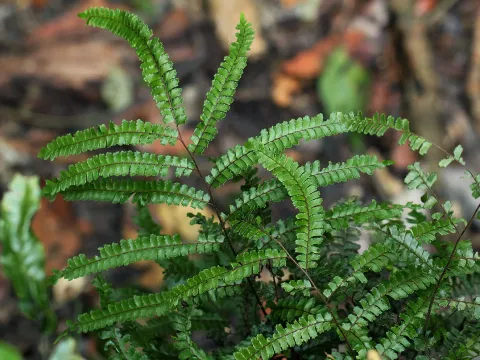
Adiantum vogelii
Adiantum vogelii
Adiantum vogelii is a distinguished member of the Pteridaceae family. Native to the humid tropical environments of Africa, this fern species thrives in sheltered, shaded, and consistently damp habitats.
What the section contains
Adiantum vogelii
For successful cultivation, the plant requires a climate that mimics its natural forest floor environment, with temperatures strictly maintained between 18 and 25 degrees Celsius.
The substrate must be well-draining, loose, and rich in organic matter. A mixture consisting of peat moss, pine bark, and perlite is often recommended to ensure optimal root aeration and moisture retention.
Lighting should be bright but indirect. Exposure to direct sunlight will cause the delicate fronds to scorch, leading to necrotic spots and rapid dehydration of the leaf tissue.
Watering must be meticulous. The growing medium should be kept moist at all times, but never waterlogged. Using room-temperature distilled or filtered water is preferred to avoid mineral buildup in the sensitive roots.
Spider mites are the most common pests associated with Adiantum vogelii, especially when ambient humidity levels drop below the threshold required by the plant.
Scale insects present a significant threat by colonizing the stipes and underside of the fronds, where they extract nutrients and weaken the plant's structural integrity.
Fungal infections, such as leaf spot diseases, are frequently observed when plants are kept in stagnant air conditions with high moisture levels on the foliage.
Root rot is typically the result of poor drainage or overwatering. This condition is often fatal if not diagnosed early, as the root system of this fern is highly susceptible to anaerobic soil conditions.
Effective management includes maintaining proper air circulation and strictly avoiding overhead watering, which helps prevent the proliferation of pathogenic fungi and bacteria.