
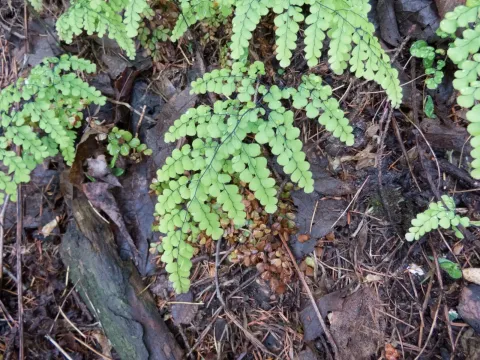
Adiantum venustum
Adiantum venustum
Adiantum venustum, commonly known as the Himalayan maidenhair fern, belongs to the Pteridaceae family. Native to the Himalayan region and parts of Afghanistan, it is recognized for its delicate foliage and adaptability to temperate climates.
What the section contains
Adiantum venustum
The plant features rhizomatous growth with thin, dark, wiry stipes supporting tripinnate fronds. This species is valued in ornamental horticulture for its graceful habit and hardiness compared to other ferns of the genus.
Environmental requirements demand high humidity and consistent moisture. In agricultural settings, it requires a sheltered position to avoid direct sun exposure, which can scorch the delicate leaf tissues.
Optimal soil conditions include a well-draining, humus-rich substrate with a slightly acidic pH. Proper aeration is crucial to prevent root zone suffocation, which often occurs in heavily compacted soils.
Temperature management is critical, as Adiantum venustum thrives in moderate conditions, typically between 15°C and 20°C. Extreme heat and cold should be avoided to maintain the structural integrity of the fronds.
The primary threats to Adiantum venustum involve fungal pathogens resulting from overwatering or lack of airflow. Root rot and leaf spot are common issues in poorly ventilated greenhouse environments.
Insect pests such as scale insects and spider mites are frequent intruders, particularly in environments with low humidity. These pests thrive in dry air and can rapidly weaken the plant by sap extraction.
Integrated pest management involves regular monitoring of the underside of the fronds. Maintaining high relative humidity acts as a natural deterrent against mite infestations.
If chemical intervention is necessary, one must select fern-safe formulations. Excessive chemical concentrations can cause phytotoxicity, leading to permanent damage to the delicate fern leaves.
Sanitation practices, including the timely removal of necrotic tissue, are essential for maintaining the overall health of the crop. Proper spacing between individual plants ensures sufficient air circulation, further reducing the risk of infestation.