
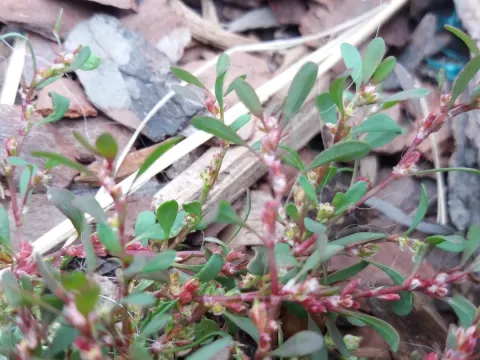
Prostrate knotweed
Polygonum humifusum
Prostrate knotweed (Polygonum humifusum) is an annual herbaceous plant belonging to the Polygonaceae family. It is known for its prostrate, spreading stems that form dense mats, often covering significant areas of disturbed soil.
What the section contains
Prostrate knotweed
The plant originates from temperate regions of Eurasia, thriving in various environments ranging from sandy riverbanks to compacted urban soil. Its ability to adapt to harsh conditions makes it a resilient species in its native range.
This crop requires full sun exposure to maintain its vigorous growth pattern. In shaded environments, the plant struggles to develop the dense foliage necessary for harvesting, making light management a key factor in agricultural planning.
Soil requirements are relatively flexible, though the species prefers well-drained soils. Its deep taproot allows it to access water in deep soil layers, providing drought resistance that is highly beneficial in arid periods.
In terms of economic use, the aerial parts of the plant are harvested for pharmacological purposes. The plant is rich in flavonoids and tannins, which are processed into traditional and modern medicines used for kidney health and inflammatory support.
The main pathological threat to Prostrate knotweed is powdery mildew, which appears as a white fungal layer on leaves during humid conditions with poor air circulation.
Insect pests such as aphids frequently attack the tender growth tips. These insects disrupt the plant's metabolic processes and can significantly lower the overall quality of the harvested medicinal biomass.
Spider mites represent a secondary threat, particularly during hot and dry weather. They cause chlorophyll depletion in the foliage, resulting in a stunted appearance and reduced medicinal potency.
Field management strategies prioritize cultural controls over chemical interventions. Maintaining proper plant spacing is essential to ensure adequate airflow and prevent the accumulation of moisture on the leaves.
Regular monitoring of the crop is necessary to identify early signs of infestations, allowing for manual or biological control methods to be implemented without compromising the chemical purity of the herbal material.