
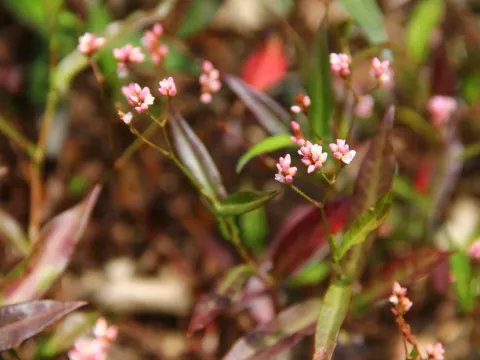
Persicaria dichotoma
Persicaria dichotoma
Persicaria dichotoma is a perennial herbaceous plant belonging to the Polygonaceae family. It is typically found in wetland habitats, riparian zones, and marshy areas, reflecting its high adaptability to aquatic or semi-aquatic environments.
What the section contains
Persicaria dichotoma
The plant originates from the Asian continent, widely distributed across tropical and subtropical regions. Its ability to colonize wet ground makes it a species of interest for specialized agricultural systems that utilize marginal, flood-prone land.
Botanically, it features sprawling or ascending stems that root easily at the nodes. The leaves are generally lanceolate, and the flowers are arranged in compact spikes, contributing to efficient seed dispersal and vegetative propagation.
Environmental requirements focus primarily on water availability and soil moisture levels. It thrives in nutrient-rich soils that maintain consistent saturation, often outperforming traditional crops in flooded or waterlogged conditions.
Agricultural use includes its potential as a forage source for livestock and its application in water purification systems, as it effectively extracts nitrogen and phosphorus from aquatic environments, serving as a natural biofilter.
The main pathological risks involve root rot and fungal infections, particularly when water circulation is insufficient, leading to stagnant conditions. Maintaining healthy water dynamics is crucial for long-term crop survival.
Pests such as aphids and various leaf-feeding larvae can pose challenges to yield. Effective management strategies involve integrating biological controls to mitigate damage without disrupting the delicate wetland ecosystem.
Preventing diseases requires careful spacing to ensure adequate airflow within the canopy. Improving ventilation reduces the incidence of powdery mildew and other foliar diseases that favor high-humidity environments.
Monitoring for signs of nutrient deficiency is equally important, as it weakens the plant's resistance to local pests. Balanced soil management remains the cornerstone of maintaining a healthy and productive crop stand.
Cultural practices, such as clearing stagnant debris, help eliminate breeding grounds for potential pests and pathogens, ensuring that the crop remains vigorous throughout the entire growing season.