
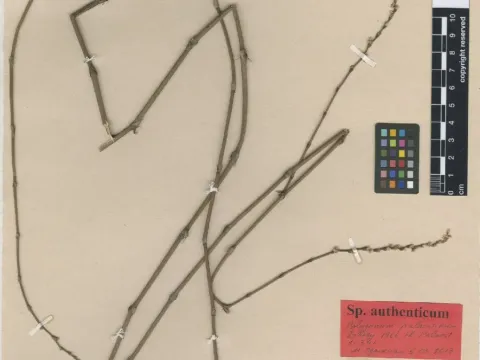
Palestinian knotweed
Polygonum palaestinum
Palestinian knotweed (Polygonum palaestinum) is a hardy species belonging to the Polygonaceae family. It is specifically adapted to arid and semi-arid environments, showing significant resilience to harsh environmental stresses.
What the section contains
Palestinian knotweed
The plant thrives in well-drained, sandy, or rocky soil conditions. It possesses deep root systems that allow it to access water resources in areas where other agricultural crops would fail to establish.
Climate requirements for this species include high solar irradiance and hot temperatures. It is well-suited for regions that experience prolonged dry spells and intense heat, making it a potentially valuable niche crop.
In terms of soil management, the crop requires minimal fertilization compared to common field crops. It is evolved to extract nutrients from poor-quality soils, maintaining structural integrity under nutrient-limited conditions.
Cultivation should focus on spacing to ensure adequate airflow around the plants. Proper site selection, avoiding areas prone to waterlogging, is crucial for the health and longevity of the knotweed stand.
Fungal infections are the primary threat to Palestinian knotweed, especially if the humidity levels rise unexpectedly. Pathogens can quickly colonize the leaves and stems, impacting the plant's overall development.
Pests such as beetles and specific insect larvae can pose a risk to the plant's vegetative parts. Monitoring for leaf damage or structural weakness in the stems is recommended throughout the growing season.
The best defense strategy involves integrated pest management. Maintaining clean fields by removing weeds that act as alternative hosts for pests is essential for a successful production cycle.
Effective soil management is also a critical tool for disease prevention. By ensuring proper drainage and avoiding excessive irrigation, farmers can significantly lower the incidence of root-related pathogens.
Regular surveillance is necessary to detect early warning signs of infestation. Prompt action, including manual removal or biological controls, can prevent the need for more intensive chemical interventions.