
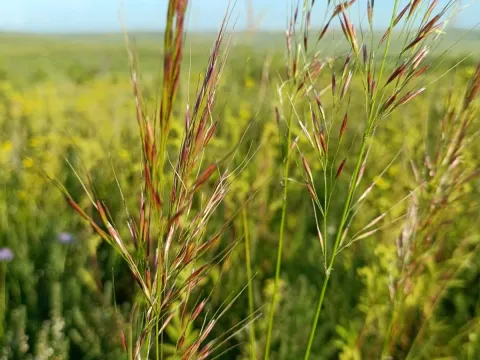
Siberian needle grass
Stipa sibirica
Siberian needle grass (Stipa sibirica) is a perennial herbaceous plant belonging to the grass family (Poaceae). It is characterized by a strong root system that allows it to survive in diverse environmental conditions.
What the section contains
Siberian needle grass
The native range of this species extends across Siberia, the Russian Far East, and parts of Central and East Asia. It is well-adapted to continental climates with cold winters and short, dry summer periods.
The crop thrives on well-drained, fertile soil types. It is particularly well-suited to loamy and sandy soils, demonstrating good resilience in areas where many other crops struggle to establish.
Being a heliophilous species, it requires ample sunlight for optimal growth. Exposure to full sun promotes better biomass accumulation and ensures the health of the plant throughout the growing season.
Cultural practices require careful site preparation. As the plant grows slowly during the first year, it is crucial to ensure that weeds are controlled to prevent competition during the initial stages of development.
The primary agricultural use of Siberian needle grass is as a forage crop. It serves as an essential component of natural grasslands and pastures, providing grazing livestock with vital nutrients.
For hay production, it is imperative to harvest the grass before the seed heads mature. Harvesting at the early heading stage ensures higher nutritional value and palatability for cattle and horses.
Beyond its forage value, the plant is highly beneficial for soil conservation. Its deep root system acts as a natural binder, which is highly effective in preventing soil erosion on sloped terrains.
The species is increasingly used in ecological restoration projects to stabilize disturbed landscapes. Its drought tolerance makes it a sustainable choice for revegetating degraded agricultural or mining lands.
Yields are largely influenced by moisture availability and soil fertility. Proper grazing management is required to maintain a healthy stand and ensure high productivity over consecutive years.
Common plant diseases include fungal infections like rust or powdery mildew, especially during seasons with excessive moisture. These diseases can negatively impact the quality of the harvested hay.
Insect pests such as grass flies and certain moths can target the foliage or stem. Routine monitoring of the crop is necessary to detect and mitigate potential pest outbreaks before they become widespread.
Integrated pest management strategies are generally preferred. This involves maintaining optimal planting densities and ensuring proper air circulation within the field to reduce the likelihood of fungal issues.
Rodent pressure can be a concern for perennial grass fields during winter months. Keeping the area free of excess debris and monitoring for burrows can help manage rodent populations effectively.
Stipa sibirica displays a high level of natural resilience. Under standard agricultural conditions, major pest or disease damage is relatively rare, making it a reliable and low-maintenance option.