
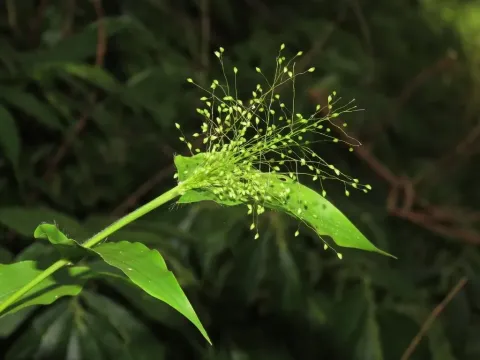
Shortleaf panicgrass
Panicum brevifolium
Shortleaf panicgrass (Panicum brevifolium) is a herbaceous plant belonging to the Poaceae family. Native to tropical and subtropical regions, this grass is notable for its adaptation to shaded environments, often found in forest edges and thickets.
What the section contains
Shortleaf panicgrass
The species prefers moist, well-drained soils rich in organic matter. Its physiological traits allow it to thrive under moderate light intensity, distinguishing it from sun-loving cereal crops that belong to the same genus.
Climatically, it requires stable warm temperatures throughout the growing cycle. It is sensitive to frost and extreme cold, which restricts its cultivation primarily to tropical and warm temperate zones.
Botanically, it features relatively short leaves compared to its relatives, which is a structural adaptation to its native forest floor habitats. The inflorescence is typically a loose, spreading panicle, which is common in the Panicum genus.
In terms of хозяйственное использование (хозяйственное использование), this grass is utilized as a cover crop and a forage species. Its ability to tolerate shade makes it an excellent choice for silvopastoral systems.
The primary threats to Panicum brevifolium include fungal pathogens such as rust and leaf spot diseases. These are typically prevalent in environments where air circulation is restricted and humidity is high.
Insect pests, including aphids and various grass-feeding larvae, pose a constant challenge to biomass production. Integrated pest management strategies are recommended to maintain plant health.
Weed competition during the establishment phase is a significant limiting factor. The use of mechanical weeding or pre-emergent herbicides is essential to ensure a uniform stand development.
Excessive moisture can lead to root system decay, particularly in poorly drained soils. Soil preparation and drainage management are fundamental to mitigating these risks during the planting process.
Overgrazing of pasture lands containing this grass can result in long-term degradation of the root system. Implementing a rotational grazing schedule is vital for maintaining the persistence of the crop.