
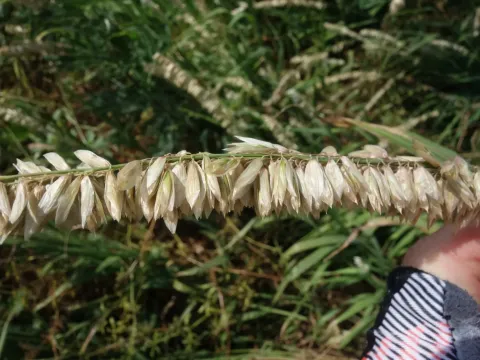
Siberian melic
Melica altissima
Sowing of Siberian melic is best performed in early spring or late summer, ensuring the soil has sufficient moisture for successful germination.
What the section contains
Siberian melic
The seeds should be planted in rows with spacing of 15 to 20 centimeters to allow for optimal plant development and effective weed control.
A shallow sowing depth of about 1 to 2 centimeters is crucial, as the small seeds of the Melica genus struggle to emerge if planted too deeply.
Firming the soil after sowing using a roller is recommended to improve capillary moisture supply and ensure consistent seed-to-soil contact.
Proper field preparation, including the removal of perennial weeds, provides a competitive advantage to the Siberian melic seedlings during the early stages of growth.
Siberian melic, known botanically as Melica altissima, belongs to the Poaceae family and is native to the temperate regions of Eurasia.
This species thrives in well-drained, fertile soils, preferring loamy or chernozem textures that provide a balanced nutrient environment.
It is known for its relatively high drought tolerance and winter hardiness, allowing it to adapt to various climatic conditions in moderate latitudes.
The plant performs best in full sunlight but demonstrates moderate shade tolerance, which is beneficial when planted near forest borders or in shelterbelts.
Regular fertilization with phosphorus and potassium significantly boosts the root strength and long-term viability of the Siberian melic stands.
Siberian melic is highly valued for its role as a forage crop, providing nutritious green mass that is palatable to both cattle and sheep.
The hay produced from this grass is rich in proteins and essential minerals, making it an excellent addition to the winter ration of livestock.
With proper management and balanced harvesting cycles, the crop can remain productive for many years, providing a stable source of feed.
Its ability to recover quickly after cutting or grazing makes it a versatile species for managed pasture systems and multi-cut silage production.
In addition to agricultural use, the species is frequently utilized in landscape restoration projects to improve soil stability and biodiversity.
Diseases such as stem rust and powdery mildew can impact the quality of the green mass, especially in seasons with high humidity and stagnant air.
Common agricultural pests like aphids or grass-eating larvae may infest the stands, requiring integrated pest management strategies to keep damage at bay.
Overgrazing poses a major threat to the survival of the stands, as it depletes the nutrient reserves stored in the plant's root system.
Invasion by aggressive perennial weeds can reduce the dominance of Siberian melic if the crop density is not maintained through proper management.
- Monitoring for pathogen outbreaks;
- Rotating grazing blocks;
- Applying balanced nutrient management.
Harvesting for high-quality hay should be timed precisely at the beginning of the heading stage to capture the peak nutritional value of the grass.
Mechanical cutting should leave a stubble height of at least 5 to 7 centimeters to protect the growing points and encourage rapid regrowth.
Seed harvesting requires careful timing, ideally conducted when the seeds are in the wax-ripeness stage, before natural shattering occurs.
Post-harvest management involves clearing the field of debris and potentially applying a light fertilizer boost to support the plant's metabolic recovery.
Proper storage of the harvested forage, including moisture control in bales, is essential to prevent degradation and mold during the winter season.