
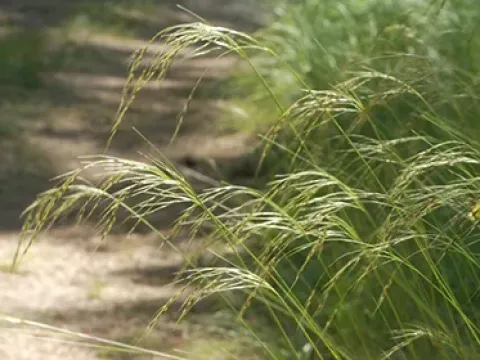
Richardson's needlegrass
Stipa richardsoni
Richardson's needlegrass (Stipa richardsonii) is a perennial grass species belonging to the Poaceae family. It is recognized for its ability to thrive in cool, temperate climates, forming resilient tufts that contribute significantly to the biodiversity of grassland ecosystems.
What the section contains
Richardson's needlegrass
The plant originates from the northern parts of North America. Its natural range extends across mountainous regions and open forests, where it occupies well-drained soils and demonstrates high ecological flexibility regarding substrate and temperature.
Regarding soil requirements, the species performs best on light-textured soils with neutral or slightly acidic pH levels. Adequate drainage is mandatory, as this plant is intolerant of waterlogged conditions, which can lead to root system decay during the dormancy period.
Climate adaptation is a key feature of this crop, as it is highly cold-hardy. It is capable of withstanding harsh winter temperatures and thrives during relatively short growing seasons, which makes it a candidate for regions with difficult agricultural conditions.
Cultivation practices focus on site selection and ensuring minimal competition from invasive weed species during the establishment phase. Once fully established, the grass is robust and requires little to no chemical input, provided the stocking density or mowing schedule is managed.
The primary agricultural use of Richardson's needlegrass is as high-quality forage for grazing livestock. It provides a valuable source of nutrients, especially when managed appropriately in a rotational grazing system or as a hay crop.
The yield of the crop is highly dependent on the timely harvest. To maximize nutritional value, harvesting should be performed before the plant reaches the mature seed stage, ensuring the concentration of proteins and minerals remains as high as possible.
Proper harvest height is essential for long-term sustainability of the stand. By leaving sufficient stubble, farmers can facilitate faster regrowth and ensure the plant maintains its energy reserves in the roots, supporting longevity across multiple seasons.
Managing the grazing pressure is critical to prevent overgrazing. Excessive consumption by livestock can jeopardize the density of the needlegrass and allow less desirable species to colonize the area, thus reducing the overall nutritional quality of the pasture.
When cured into hay, the biomass of Stipa richardsonii provides a palatable and nutritious feed for cattle and other ruminants, serving as a reliable energy source during winter months when natural forage is unavailable.