
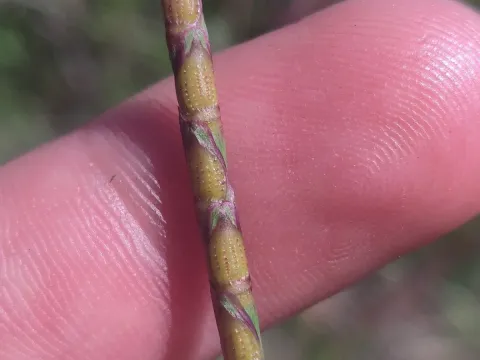
Rottboellia
Rottboellia L. f.
Rottboellia, commonly known as itchgrass, belongs to the Poaceae family. It is recognized as a highly competitive grass weed in various agricultural cropping systems.
What the section contains

Rottboellia
The plant thrives in tropical and subtropical climates, requiring significant heat and moisture for germination and rapid vegetative development.
It adapts to a wide range of soil conditions, though it exhibits peak growth potential in fertile, nitrogen-rich soils with consistent water availability.
Botanically, it is identified by its robust stem and leaf sheaths covered in sharp, stiff hairs, which can irritate the skin of field workers and livestock.
Effective management requires a combination of crop rotation, timely mechanical weeding, and the strategic application of herbicides tailored to the plant's growth stages.
The primary agricultural threat posed by Rottboellia is its ability to aggressively outcompete essential crops like maize, sugarcane, and soybeans for vital resources.
The plant serves as a host for various diseases that can jump to primary crops, complicating the phytosanitary management of an agricultural plot.
Several insect pests utilize Rottboellia as a refuge, increasing the pest pressure on nearby cultivated fields throughout the growing season.
Due to its high seed production and prolonged dormancy, seeds can persist in the soil seed bank, necessitating multi-year control programs.
Chemical control programs often struggle with resistance issues, making integrated pest management (IPM) critical to minimizing the economic impact of this weed.