
Richardson brome
Bromus richardsonii
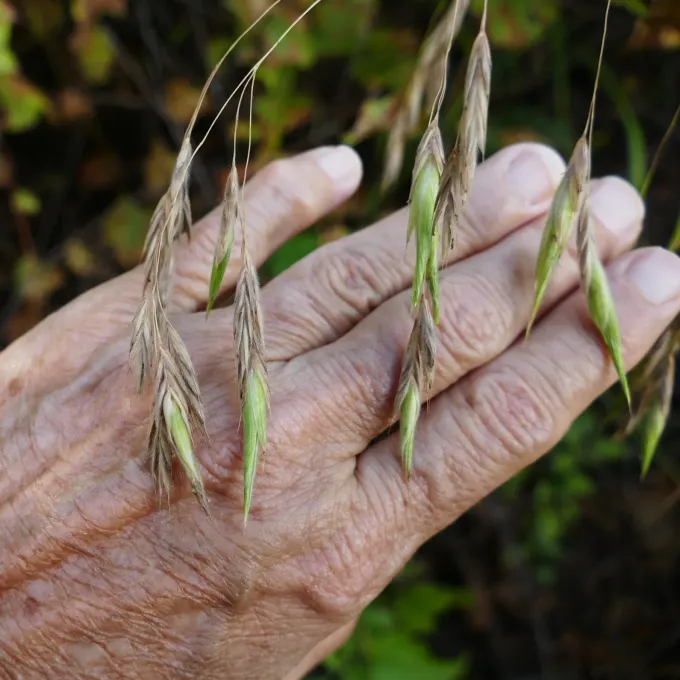
Description
Sowing dates
Richardson brome (Bromus richardsonii) is a hardy perennial grass belonging to the Poaceae family. For successful establishment, sowing should be conducted in early spring when the soil temperature consistently reaches 5–8 degrees Celsius to support uniform germination.
Late autumn sowing is also a viable option in temperate regions, allowing the seeds to undergo natural stratification during the winter months. Seeds should be planted at a shallow depth of 1.5–2 centimeters to ensure adequate moisture access and optimal contact with the soil profile.
Seeding rates typically range from 8 to 15 kg per hectare, depending on whether the primary goal is pasture development or seed production. Row spacing is usually kept between 15 and 30 centimeters to minimize competition between individual plants.
Post-sowing soil compaction is an essential agronomic practice to prevent moisture loss from the surface layer and ensure the root systems establish firmly. This step is particularly critical in drier spring conditions.
During the early growth stages, the seedlings grow relatively slowly. It is vital to manage weed competition during this period, as the brome requires unobstructed access to nutrients and light to develop a robust root architecture.
Growing requirements
This grass is highly adaptable to a wide range of environmental conditions. Native to North American grasslands, it thrives in temperate climates and demonstrates excellent cold tolerance, allowing it to survive harsh winter conditions without significant dieback.
Richardson brome prefers well-drained soil types, including loams and sandy loams. While it tolerates a variety of soil textures, it is sensitive to waterlogging; therefore, sites with good drainage are essential for maintaining high productivity and stand longevity.
The plant performs well in neutral to slightly acidic soils. If soil acidity is significantly low, liming can be used to improve nutrient uptake and overall plant vigor, which in turn leads to a higher biomass output.
While the species is relatively drought-tolerant once established, it responds positively to adequate moisture during the vegetative phase. Its deep root system allows it to access deeper soil moisture during periods of summer stress.
Full solar exposure is optimal for this species. Although it shows some shade tolerance in the early stages, maximum growth and biomass production are achieved in open fields with consistent sunlight throughout the day.
Yield
The productivity of Richardson brome increases notably in the second and third years as the stand matures. With appropriate fertilization, specifically nitrogen applications in the spring, the yield of green biomass can be significantly enhanced.
Under favorable management, the grass can produce 4 to 7 tonnes of high-quality hay per hectare. The number of cuttings is typically limited to one or two per season to preserve the plant's health and longevity in the long term.
The grass is highly valued for its nutritional content, especially when harvested before full maturity. Its leaves remain soft and palatable, making it an excellent component for high-quality livestock forage.
After five years of production, yields may begin to decline as the plants age. Integrating the brome into a rotation cycle or overseeding with legumes can help maintain the productivity and nutritional value of the pasture.
Fostering root development through controlled harvest regimes is key to sustained yield. Avoiding overgrazing or overly frequent mowing ensures the plants maintain sufficient reserves in their crowns for rapid regrowth.
Main diseases and pests
Richardson brome is susceptible to common grass pathogens such as rusts and powdery mildew. These diseases are most prevalent during periods of high humidity and warm temperatures, especially in dense, poorly ventilated stands.
Strategic management of stand density and moisture levels is the best defense against fungal infections. Ensuring proper airflow through the field can significantly reduce the incidence of these diseases.
Pests such as grass bugs and various stem-boring insects can cause damage during the vegetative stage. These pests may affect both biomass quality and the development of the seed heads during the generative phase.
Soil-dwelling larvae, such as wireworms, can damage the roots of younger plants. This risk is higher in fields recently converted from long-term pasture or idle lands, necessitating careful site assessment before sowing.
Implementing a comprehensive integrated pest management (IPM) plan, which includes using treated seeds and maintaining healthy soil conditions, is the most effective approach to mitigating these biological threats.
Harvesting
The timing of the harvest is critical for forage quality. The optimal window for hay production is the early flowering stage (heading), as this ensures the best balance between biomass quantity and protein concentration.
Delaying the harvest beyond the heading stage causes the stems to lignify, resulting in reduced palatability and lower digestibility for livestock. A cutting height of 6–8 centimeters is recommended to protect the crown and encourage rapid recovery.
When harvesting for seeds, the crop should be direct-combined when the panicles show signs of maturity. Since seeds tend to shatter easily, harvest operations must be completed promptly once the grain reaches the desired moisture content.
Once harvested, seed moisture levels must be managed through immediate drying to 12–14%. Proper storage conditions in cool, dry areas are necessary to maintain seed viability and germination rates for the following seasons.
Leaving stubble after harvest is beneficial for soil health, as it provides cover against erosion and helps incorporate organic matter back into the soil, supporting the long-term fertility of the site.