
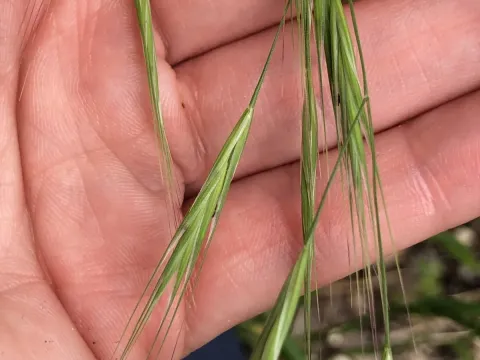
Rigid brome
Bromus rigidus
Rigid brome (Bromus rigidus) is typically an annual grass that functions as a winter annual in most climates. Sowing usually occurs in the autumn months, following the onset of cool and rainy weather, which triggers seed germination.
What the section contains
Rigid brome
For successful establishment, seeds should be sown at a shallow depth of 1 to 3 centimeters. This provides the ideal balance between moisture retention and accessibility for the developing coleoptile.
The species is known for its staggered germination pattern due to seed dormancy mechanisms. Effective management requires planning sowings or interventions that account for these biological traits to prevent dense infestations in crops.
Seedbed preparation is crucial; creating a clean, weed-free environment before sowing helps ensure that Bromus rigidus populations do not get a head start over desired crop species.
Early sowing in favorable conditions allows the grass to develop a robust root system, ensuring it can compete effectively for resources during the winter and early spring months.
Belonging to the Poaceae family, rigid brome is highly adaptable to various soil types, ranging from sandy and rocky soils to heavier loams. It thrives in open, sunny locations where it can outcompete other plants.
The species exhibits high drought tolerance, making it a dominant flora in Mediterranean-type climates. It efficiently utilizes winter and spring moisture to complete its life cycle before the onset of summer drought.
While it is not demanding regarding soil fertility, it prefers neutral to slightly alkaline pH levels. It struggles in waterlogged or highly acidic soils, which limits its spread in certain wetland or forest ecosystems.
Rigid brome requires high light intensity for optimal growth. Shading from competing crops or dense vegetation significantly hampers its development, reducing the overall biomass produced by the plant.
Management practices should focus on preventing soil compaction and ensuring adequate drainage, as these factors significantly influence the ability of the plant to establish deep, moisture-seeking roots.
The agricultural use of Bromus rigidus is limited by the presence of long, stiff awns on the seeds. These awns can cause physical damage to the mouth and digestive tracts of livestock, making mature plants undesirable for forage.
In terms of biomass, rigid brome can provide early-season green forage, but its nutritive value declines rapidly as the plant moves into the reproductive stage and begins to lignify.
In professional agriculture, rigid brome is primarily considered a weed. Its presence in grain crops reduces yield through resource competition and lowers grain quality, often requiring cleaning and sorting processes after harvest.
In soil conservation programs, the plant can be useful for binding surface soil and preventing wind erosion, thanks to its extensive and dense fibrous root system that stabilizes the topsoil layer.
Economic returns from the deliberate cultivation of rigid brome are non-existent, so management strategies usually focus on controlling its presence rather than enhancing its yield.
The primary threat posed by rigid brome is its aggressive nature as a weed in cereal crop fields. It competes for nitrogen and water, leading to significant yield losses in wheat and barley production systems.
Chemical control via selective herbicides is the most common management strategy. Applications must be timed precisely during the early growth stages, as older plants develop high resistance to many chemical agents.
Pests such as cereal aphids and various fly larvae can infest rigid brome populations. While these insects are typically managed to protect the main crop, they play a role in limiting the vigor of the weed.
Fungal diseases like rust and powdery mildew can infect the plants during wet seasons. While these diseases can suppress the weed, they may also serve as a reservoir for diseases that affect the primary commercial crops.
Mechanical control, such as shallow discing or cultivation after the harvest of the main crop, is essential to destroy seedlings and prevent the formation of a persistent soil seed bank.
If harvesting for forage is necessary, it must be performed before the plants develop seeds and awns. Once the spikelets harden, the material becomes hazardous for animal consumption.
Harvesting for seed management or specific research purposes should be done at the soft dough stage to prevent the seeds from shattering and spreading throughout the field.
Post-harvest processing of any material contaminated with rigid brome requires careful handling to remove seeds and awns, which can otherwise cause respiratory or physical irritation to handlers.
Pasture management includes intensive grazing early in the season to prevent the grass from reaching the heading stage, thereby reducing the annual replenishment of the seed bank in the soil.
Proper cleaning of machinery used in fields infested with Bromus rigidus is vital to prevent the spread of seeds between different parts of the farm or to neighboring plots.