
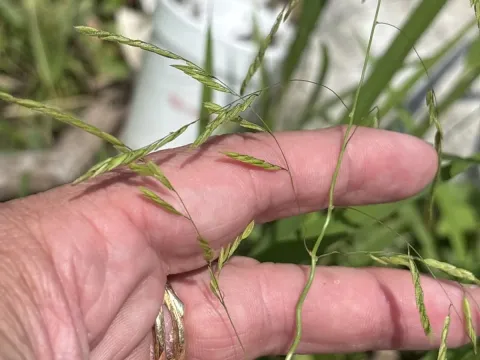
Rice cutgrass
Leersia oryzoides
Rice cutgrass, scientifically known as Leersia oryzoides, is a perennial wetland grass that belongs to the Poaceae family. It is widely recognized for its preference for wet habitats and its ability to spread vigorously via creeping rhizomes throughout the growing season.
What the section contains
Rice cutgrass
For intentional propagation, seeds are typically sown in early spring. The seeds require a period of cold stratification to overcome dormancy, a biological adaptation that allows them to germinate once the floodwaters of winter begin to recede.
The optimal planting depth for seeds is shallow, often requiring just a light covering of moist silt or soil. Maintaining consistent moisture is essential during the initial weeks of development to ensure the radicle can successfully establish in the substrate.
Once established, the plant exhibits a rapid growth rate, forming dense colonies that are highly effective at binding soil. This growth strategy makes it a reliable choice for initial vegetation establishment in reclaimed wetland projects.
Transplanting rhizome segments is an alternative and often more successful method for establishing new populations, providing a faster rate of cover than direct seeding in challenging environments.
Rice cutgrass is a classic hydrophyte, thriving in environments where water levels remain high. It is most commonly found along the margins of ponds, slow-moving streams, and in drainage ditches where the soil remains saturated throughout the year.
The climate requirements for this species are broad, as it is native to various regions across North America, Europe, and Asia. It is remarkably winter-hardy, with its rhizomes capable of surviving deep freezes within the mud of frozen water bodies.
The soil profile should be rich in organic matter, such as muck or silt. The plant prefers slightly acidic to neutral soil conditions, which are typical of the anaerobic environments found in marshy areas where it naturally dominates.
Full sun is required for optimal development. While it possesses some tolerance for partial shade, restricted light exposure significantly limits its biomass accumulation and reduces the plant's ability to produce viable seeds.
It is sensitive to prolonged desiccation. If water levels drop significantly for an extended period, the plant may suffer from reduced vitality, leading to an increased susceptibility to competition from upland plant species.
The agricultural and economic utility of Rice cutgrass is primarily focused on environmental management rather than traditional crop production. It is a critical species for stabilizing stream banks and preventing soil erosion in hydric landscapes.
In terms of forage, it is generally considered poor due to the presence of sharp, siliceous teeth on the leaf margins, which can lacerate the mouthparts of grazing livestock. However, it serves as a natural food source for various species of waterfowl and muskrats.
Phytoremediation is a significant modern use for this species. It has shown a high capacity for absorbing excess nutrients such as nitrogen and phosphorus from agricultural runoff, effectively acting as a natural water filter.
Despite its benefits, it is often viewed as a problematic weed in commercial rice cultivation. Its physical resemblance to cultivated rice in its early stages makes it difficult to manage without specialized, labor-intensive weeding methods.
Future potential lies in the use of its fiber for specialized paper production or as a biomass source for renewable energy, provided that harvesting techniques can overcome the challenges posed by its wetland habitat.
Rice cutgrass is relatively hardy, but it remains susceptible to changes in land use, particularly drainage and large-scale reclamation. Loss of habitat is the most significant threat to local populations, as the plant cannot survive in dry environments.
Fungal pathogens such as leaf rust and powdery mildew may occur when humidity levels remain high for extended periods with poor air circulation. While these diseases rarely kill the plant, they can significantly reduce its photosynthetic efficiency.
Insect pests, including various caterpillars and aphids, can cause localized damage to the foliage. These infestations are usually minor unless the plant is already stressed by water fluctuations or nutrient imbalances.
Invasive non-native species pose a major competitive threat. Aggressive hydrophytes, such as Phragmites australis or certain species of cattails, can easily outcompete rice cutgrass for light and space in dense wetland ecosystems.
Integrated management plans for this plant focus on maintaining stable hydrology, which is the most effective way to prevent encroachment by invasive species and ensure the continued health of existing stands.