


Биоорганическое нано удобрение "НАГРО" / "NAGRO"
LLC NPO "BIOPLAN"
Fertilizers
43
25
1 offer
37.63 €за л
Buy

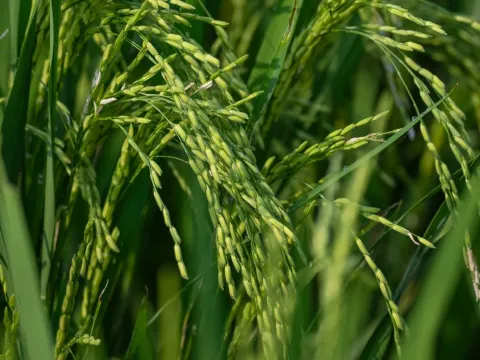
Oryza
The sowing period for rice is heavily dependent on temperature, as it is a thermophilic crop. Germination typically begins at soil temperatures of 12–15°C, while intensive development requires 25–30°C.


In major rice-growing regions, planting occurs in the spring once the risk of late frosts has passed and the water in paddies reaches stable growth-promoting temperatures.
Various sowing methods are employed, including dry seeding with drills in prepared soil followed by flooding, or the manual sowing of pre-germinated seeds directly into the water layer.
Seeding rates depend on the variety and specific cultivation techniques, usually ranging from 120 to 200 kg per hectare to ensure optimal stand density and minimize competition among plants.
Adhering to correct sowing dates is crucial, allowing the crop to fully utilize the growing season's thermal resources before autumn temperatures decline.
Rice (Oryza) belongs to the Poaceae family and is one of the world's most critical food crops. The most widely cultivated species are Oryza sativa and Oryza glaberrima.
Rice has high water requirements and is uniquely adapted to waterlogged environments. It features aerenchyma, specialized tissue that allows oxygen to reach the roots even when submerged in stagnant water.
The ideal soil for rice is heavy clay or loam, characterized by low permeability, which helps maintain the 10–20 cm layer of standing water required throughout the growing season.
Rice requires significant solar radiation and high ambient humidity. During flowering and grain filling, the crop is sensitive to extreme fluctuations in diurnal temperatures, which can negatively impact pollination.
Proper mineral nutrition, particularly the timely application of nitrogen fertilizers, is essential to support the rapid vegetative growth and ensure high final yields.
Yield in rice production is a key metric determined by the quality of seeds, effectiveness of agronomic management, and favorable weather conditions during the maturation phase.
In standard industrial operations utilizing modern high-yielding varieties, average production typically ranges from 5 to 8 tons per hectare.
Through the integration of precision farming, advanced irrigation systems, and hybrid seed technology, high-intensity operations can consistently achieve yields exceeding 10 tons per hectare.
Limiting factors for yield include poor water management, severe weed infestation, and the prevalence of pathogens that can cause lodging or grain sterility.
Strategic crop rotation is often used to improve soil health and break the cycle of rice-specific weeds and pests, ultimately contributing to more stable and higher production output.
Rice is susceptible to various fungal diseases, with rice blast (Pyricularia oryzae) being the most destructive, capable of causing widespread yield loss under humid conditions.
Other significant threats include brown spot, bacterial leaf blight, and sheath blight, which weaken the plant and lead to lower quality and quantity of harvested grain.
Pests such as rice water weevils, various stem borers, and moths can cause extensive damage to the foliage and stems during different stages of the plant's development.
Effective plant protection requires a holistic approach, combining chemical treatments with biological controls and diligent monitoring of the crop canopy throughout the season.
Harvesting rice is a precise operation that requires identifying the exact moment of biological maturity to ensure high grain quality and minimize field losses.
The optimal harvest window occurs when grain moisture content drops to 18–22%, which is typically indicated by the yellowing of the majority of the panicles.
Two-stage harvesting is common, where the rice is cut into swaths to dry in the field before being gathered and threshed by a combine harvester.
Direct combining is also an option, but it requires careful calibration of the threshing mechanism to prevent damage to the delicate rice kernels.
Post-harvest processing is mandatory, involving cleaning and drying the grain to a safe moisture level of 14–15% to ensure its quality during long-term storage.