
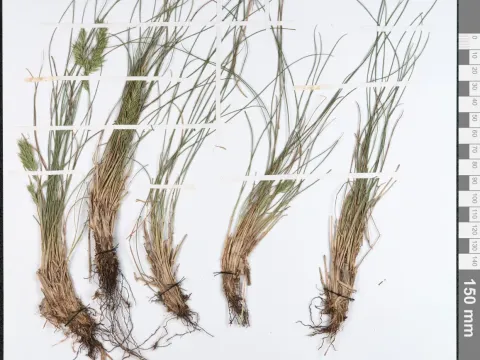
Rock fescue
Festuca saxatilis
Rock fescue, a member of the Poaceae family, is a perennial grass species that exhibits slow development during its initial establishment phase. The optimal time for sowing is early spring, when soil moisture levels are sufficient to support consistent seed germination.
What the section contains
Rock fescue
Autumn sowing is also an option in regions with mild winters, allowing seeds to utilize early spring moisture. Seeds should be sown at a shallow depth, as the small size of the seeds requires proper contact with the soil surface and access to light to trigger germination.
Field preparation requires careful leveling and compaction of the seedbed to ensure uniform sowing depth. Utilizing a cultipacker after seeding significantly enhances establishment success, particularly in open and windswept agricultural areas.
The seeding rate typically ranges from 10 to 12 kg per hectare, depending on local soil quality and the desired density of the sward. Using high-quality seed material ensures a balanced stand that avoids nutrient competition during the first year.
Weed management is critical during the first few weeks, as the grass grows slowly at first. Inter-row cultivation or light harrowing can protect young seedlings from being crowded out by faster-growing competitive weed species.
As the name suggests, Rock fescue is highly adapted to rocky, nutrient-poor, and challenging environments. It displays exceptional drought tolerance and remains resilient even in soils with minimal organic matter and limited depth.
The plant thrives in well-drained, aerated soils and is sensitive to waterlogging. It is highly adaptable to a range of soil pH levels, from acidic to slightly alkaline, making it a versatile choice for hillsides and mountainous terrain where other crops fail.
Climatic requirements are marked by superior winter hardiness, allowing it to survive in regions with severe temperatures. While it prefers open, sunny locations, it can tolerate partial shade and performs well in exposed landscape conditions.
Cultivation of Rock fescue requires minimal fertilizer input, as it is naturally suited to extensive management systems. Over-fertilization, especially with nitrogen, can reduce the plant's natural hardiness and increase its susceptibility to lodging.
The deep and dense root system provides excellent soil stabilization on slopes, actively preventing erosion. Its ability to create a tough turf makes it ideal for areas prone to soil degradation due to wind or water runoff.
Yield levels for Rock fescue are generally moderate, focusing more on quality and persistence rather than sheer biomass volume. It is highly valued as a forage component that maintains nutritional content even during dry summer months.
When used in multi-species perennial forage mixtures, it provides a stable yield over many years of utilization. The highest dry matter production is typically reached in the second and third years of establishment.
Its grazing tolerance allows for effective utilization in rotational grazing systems, particularly on marginal lands where intensive cropping is not viable. It recovers quickly after grazing, maintaining ground cover throughout the season.
Rock fescue provides a reliable source of protein and essential fibers for ruminants. It remains palatable throughout the growing season, which is a major advantage for maintaining livestock productivity in tough environments.
Seed production yield is often variable due to uneven ripening; thus, most agricultural applications focus on hay and grazing rather than intensive seed harvesting for commercial distribution.
Like many fescue species, Rock fescue is susceptible to common fungal pathogens, such as powdery mildew and various rust species. These diseases are most prevalent in humid, stagnant air conditions where airflow is restricted.
Insect pests, including cereal flies and aphids, can cause damage to the growing points and leaves. Management focuses on cultural practices such as maintaining an open stand and avoiding excessive nitrogen, which can attract pests.
Root rots are primarily a risk in heavy, compacted, or waterlogged soils. Ensuring excellent drainage is the primary defense mechanism against these types of soil-borne pathogens in fescue stands.
Mono-cropping increases the risk of disease buildup, which is why integrated planting with legumes is highly recommended. Mixed stands create a more balanced ecosystem, increasing resilience to local pest and pathogen outbreaks.
Regular monitoring during peak growth phases allows for early detection of potential threats, ensuring that any necessary management interventions remain targeted and minimal.
Hay harvesting should occur during the full heading stage, before mass flowering, to ensure the optimal balance between biomass yield and nutritional value. Delaying harvest leads to increased fiber content and decreased digestibility.
For seed harvesting, timing is critical to prevent losses from shattering, as the seeds ripen unevenly. Using combine harvesters with precise settings for low drum speed is essential to minimize mechanical damage to the delicate seed heads.
Curing hay requires well-ventilated conditions to prevent molding and retain its nutritional profile. Proper moisture content must be maintained during storage to ensure long-term quality and prevent spoilage.
Grazing management should focus on rotational schedules, giving the plants sufficient time to recover after intense feeding. This rotational approach extends the productive life of the Rock fescue stand for many years.
Storage facilities for both seed and hay should be dry, cool, and well-aerated, protecting the harvested crop from humidity and potential post-harvest storage pests.