
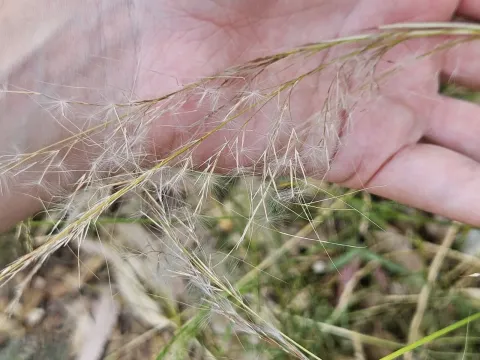
Pappose feathergrass
Stipa papposa
Stipa papposa, commonly known as pappose feathergrass, is a perennial grass species in the Poaceae family. The sowing of this culture is best performed during the autumn period, allowing the seeds to undergo natural stratification under low temperatures, which significantly improves germination rates in the spring.
What the section contains
Pappose feathergrass
When sowing, seeds should be placed at a shallow depth of approximately 1 to 2 centimeters. Ensuring good contact with the soil is crucial for the germination process, as the seeds are small and can easily dry out if left too exposed on the surface.
The establishment phase of Stipa papposa is relatively slow, requiring careful monitoring to prevent weeds from outcompeting the young seedlings. Early manual or mechanical weeding is highly recommended during the first few months of growth to ensure a uniform stand.
For commercial or professional landscaping purposes, the sowing density is calculated based on the desired coverage. While closer spacing is used for immediate aesthetic impact, wider spacing is preferred to allow the plants to develop into full, mature clumps without overcrowding.
Pre-treatment of seeds with plant growth regulators can enhance root development, which is vital for the plant's survival during its first season. Strengthening the root system allows the grass to quickly adapt to the local soil and moisture conditions.
As a true xerophyte, pappose feathergrass thrives in environments with limited water availability. Its natural range consists of dry steppes and rocky slopes, indicating a high tolerance for drought and persistent sunny conditions.
The plant is not demanding regarding soil fertility and can successfully grow in poor, rocky, sandy, or alkaline soils. However, the ideal growth is achieved in well-drained substrates that prevent any form of stagnant moisture around the roots.
Stipa papposa is highly heliophilic and requires full sun exposure to maintain its vigor and distinctive structural shape. Shady conditions typically result in weak, floppy stems and a significant reduction in the plant's natural aesthetic appeal.
The species exhibits impressive cold hardiness, surviving harsh winter temperatures common in temperate climates. Providing the soil is well-drained, the root system remains viable even during deep soil freezing events throughout the dormant season.
Avoiding waterlogged areas is the most important requirement for successful cultivation. Poor drainage often leads to root rot and other pathogen-related issues that can severely damage or destroy established clumps of feathergrass.
Pappose feathergrass is primarily utilized for non-agricultural purposes, such as soil erosion control and landscape design. Its dense, fibrous root system makes it an excellent choice for stabilizing steep banks and preventing topsoil loss in vulnerable regions.
In ornamental horticulture, the plant is highly valued for its elegant, feathery flower heads and its architectural presence. It is often incorporated into xeriscaping projects, rock gardens, and meadows where a naturalistic, wild appearance is desired.
Its use as a forage crop is very limited due to the rough, silica-rich foliage and sharp awns present in the flowering stage. These physical characteristics can cause significant irritation and injury to livestock, making the grass unsuitable for grazing or hay production.
Seed harvesting is conducted when the inflorescences are fully mature and the pappi are easily detached. Managing the harvest properly allows the grower to collect high-quality seeds for future plantings or to sell to specialized nurseries.
Maintaining mature plants requires minimal effort, usually limited to an annual spring clean-up. Cutting back old, dormant foliage encourages the development of new, vibrant growth, which keeps the plants healthy and attractive throughout the growing season.
Stipa papposa displays an exceptional natural resistance to many common fungal and bacterial diseases found in modern agricultural settings. This is largely due to its evolutionary adaptation to arid conditions, which are generally unfavorable for the spread of most pathogens.
The most significant threat to the health of these grass stands is high soil moisture levels. Persistent wetness during warm weather promotes the growth of rot-causing fungi that can attack the base of the plant, potentially causing rapid decline.
Insect pests are generally not a major concern for this grass. The leaves contain high amounts of silica, creating a tough, abrasive surface that deters many generalist herbivores and insect pests from feeding on the plants.
In some instances, subterranean larvae such as those of scarab beetles can cause damage to the root system. If damage is observed, implementing targeted biological controls is the most effective and eco-friendly method to protect the plant population.
To minimize disease risk, it is essential to ensure adequate airflow within the stand. Avoiding overly dense planting helps maintain a dry microclimate around the foliage, which is one of the most effective preventive measures against any potential fungal outbreaks.