
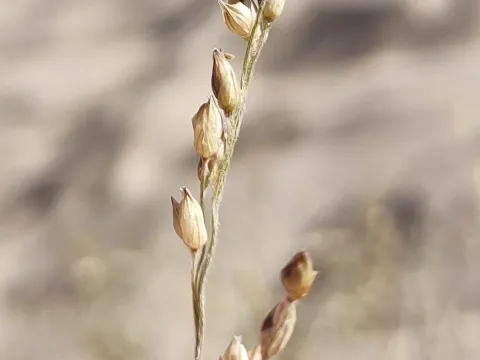
Panicum urvilleanum
Panicum urvilleanum
Panicum urvilleanum is a perennial grass species from the Poaceae family, primarily propagated by seed during the warm season when thermal conditions are stable.
What the section contains
Panicum urvilleanum
Sowing should take place when soil temperatures consistently reach 15–18 degrees Celsius, ensuring optimal conditions for seed germination and seedling emergence.
Seed depth should be maintained at 2–3 centimeters, as deeper placement may result in delayed emergence or exhaustion of seedling energy reserves.
Adequate seedbed preparation is necessary to ensure good soil-to-seed contact, which facilitates faster moisture absorption for the dormant seeds.
Regular spacing between rows is recommended to allow the plants to tiller extensively and establish a robust root system during the first year.
This species is highly regarded for its exceptional drought tolerance, making it an ideal choice for arid and semi-arid agricultural environments.
The plant thrives in well-drained, sandy, or loamy soils, which prevent the root system from being exposed to waterlogging conditions for extended periods.
High solar radiation is a key requirement for the development of Panicum urvilleanum, as it facilitates photosynthetic activity and biomass production.
The plant demonstrates significant tolerance to saline soil conditions, potentially providing value for the restoration of degraded or marginal farmlands.
- Annual rainfall tolerance: 300–500 mm
- Temperature range: 20–35 degrees Celsius
- Soil preference: Light, sandy textures
The total dry matter yield is heavily influenced by nitrogen availability, which supports vigorous vegetative growth during the main season.
Under optimal management, producers can expect to harvest multiple cuts per year, significantly increasing the total annual biomass output.
Average forage yields typically range from 15 to 25 metric tons of green matter per hectare, depending on the specific growing conditions and soil fertility.
Seed production is a viable secondary objective, with yields potentially reaching up to 1 ton per hectare when managed specifically for seed multiplication.
Integrated nutrient management, including the use of balanced fertilizers, is critical to maintaining productivity over several years of harvest.
Panicum urvilleanum exhibits a high degree of natural resistance to most common cereal diseases, which reduces the need for frequent fungicide applications.
The primary biotic threats include occasional insect infestations, such as aphids or grasshoppers, which primarily impact the plant in the juvenile stages.
Proper weed management is essential during the establishment phase, as the young plants are sensitive to competition from fast-growing invasive weeds.
Maintaining proper field hygiene, including the removal of crop residues, helps in preventing the buildup of potential pathogens over successive years.
Most potential threats can be mitigated by choosing resistant land plots and maintaining healthy, vigorously growing crop stands throughout the year.
Harvesting for forage should be performed during the booting or early flowering stage to achieve the highest nutritional content for livestock.
Delaying harvest until the plant reaches maturity significantly lowers the protein levels and digestibility due to the accumulation of structural carbohydrates.
The use of mechanical conditioners during harvesting can decrease field drying time, which is beneficial in climates with variable weather patterns.
A stubble height of at least 6–10 centimeters is required to allow the plant to recover and produce a second or third regrowth cut during the season.
Post-harvest processing, including baling and storage in ventilated barns, is essential to protect the quality of the hay and prevent microbial spoilage.