
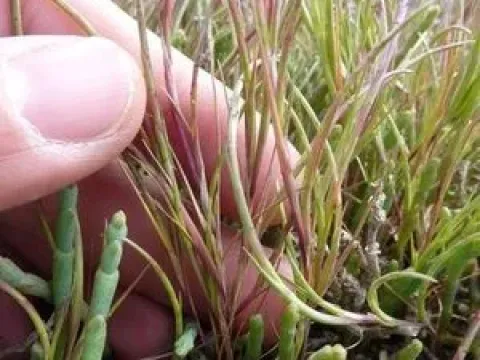
Parapholis
Parapholis
Parapholis is a genus of annual grasses belonging to the Poaceae family, widely known for its remarkable salt tolerance. These plants have adapted specifically to hypersaline environments where most conventional agricultural crops would fail to survive.
What the section contains


Parapholis
The geographic distribution of the genus encompasses coastal regions, salt marshes, and saline meadows across the Mediterranean and parts of Western Europe. They thrive in environments where seasonal flooding with seawater occurs, showcasing their unique physiological adaptation to sodium-rich substrates.
Botanically, the plant is characterized by slender culms and narrow, linear leaves. The inflorescence is a distinct cylindrical spike that disarticulates into segments at maturity, a key evolutionary mechanism for seed dispersal facilitated by tidal water movement.
Climate and soil requirements are specific: Parapholis requires open, sunny environments and soil with high mineral salt content. It acts as an indicator species for saline soil conditions, thriving where soil drainage and high light intensity are balanced against saline stress.
Regarding agricultural use, the genus is explored for its potential in restoring degraded saline lands and as a forage resource in areas unsuitable for traditional hay production. Its ability to extract minerals and survive in harsh saline zones offers a sustainable approach to managing difficult farmland.
The primary threats to Parapholis cultivation include fungal pathogens that emerge during periods of prolonged stagnant moisture. These pathogens can cause leaf spot and reduced vigor if drainage is not properly managed in the cultivated field.
Pests such as specialized beetles and aphids may attack the plant, although the high salt concentration in the tissues serves as a natural deterrent. Monitoring for infestation is necessary during the vigorous growth phase to ensure yield quality.
Competition from non-halophytic, aggressive weeds poses a challenge if soil salinity levels are reduced artificially. Maintaining the appropriate salinity balance is crucial for keeping Parapholis as the dominant cover crop in its environment.
Root rot is a significant risk in poorly managed agricultural settings where water stagnation occurs. Ensuring periodic cycles of soil moisture fluctuation mimics the natural habitat and effectively reduces the incidence of soil-borne diseases.
Seed loss due to granivorous birds and small rodents can be substantial during the final maturation stage. Protecting the seed heads is essential for maintaining the seed bank for subsequent sowing cycles in salt-affected areas.