
Pappophorum
Pappophorum
Pappophorum is a perennial grass that is best established in the spring once soil temperatures reach a stable 15–18 degrees Celsius. Successful germination requires adequate surface soil moisture and careful management during the early growth stages.
What the section contains


Pappophorum
Seeds should be sown at a shallow depth of 1–2 centimeters. Because the seeds are small, it is essential to roll the soil after planting to ensure good seed-to-soil contact and improve overall emergence rates.
The choice of sowing timing depends on the specific climatic zone. In arid regions, early spring sowing is preferred to capitalize on residual moisture, allowing the root system to establish before the onset of summer heat.
Seeding rates should be adjusted based on seed viability and soil characteristics. Using high-purity, certified seeds is highly recommended to avoid weed competition during the critical initial establishment phase.
Since early growth is relatively slow, proactive weed management is necessary during the first 4–6 weeks to ensure that young seedlings are not suppressed by more aggressive competitive vegetation.
Pappophorum belongs to the Poaceae family and is well-adapted to semi-arid climates, including deserts and grasslands. It is highly valued for its exceptional tolerance to extreme heat and prolonged drought conditions.
The crop thrives in light, well-drained soils, such as sandy or sandy-loam types. It does not tolerate waterlogging, so selecting fields with excellent drainage is crucial for preventing plant stress or root death.
It is an obligate sun-loving plant that requires full exposure to solar radiation. Shading from neighboring taller crops or trees will significantly reduce its growth rate and overall biomass production.
With an extensive and deep-reaching root system, Pappophorum efficiently accesses subsoil moisture, which allows it to remain productive even when the surface soil is completely dry.
The plant demonstrates moderate salt tolerance, making it an excellent candidate for the restoration of degraded pastures or saline-affected agricultural lands in dry regions.
Yield potential in Pappophorum is strongly tied to water availability and nitrogen levels. While biomass production may be modest in ultra-arid conditions, it remains more consistent than many conventional forage crops.
Its primary agricultural use is as a grazing forage. The plant is noted for its high resistance to trampling, which makes it an ideal choice for persistent pasture systems in hot and dry climates.
For hay production, harvesting should be performed before the flowering stage to ensure the nutritional quality. Once the plant sets seed, the stems become fibrous and significantly lower in protein content.
Seed production can be substantial if the crop is managed with proper fertilization during the booting stage. Intensive management under supplemental irrigation can significantly boost both seed and forage yields.
To ensure long-term stand longevity, rotational grazing is advised. This allows the plants to recover their energy reserves after heavy grazing events, extending the life of the pasture by several years.
Pappophorum is naturally resistant to many common cereal diseases, which reduces the need for expensive chemical interventions and makes it a cost-effective option for low-input farming systems.
The most common threat is root rot, which occurs if the soil remains saturated for extended periods or if there is standing water in the field. This issue is usually related to poor site selection or soil drainage.
While the plant is generally pest-resistant, aphids or leafhoppers may occasionally target young stands. Economic threshold levels are rarely met, but monitoring is advised during the early growth stages.
Competition from weeds is the main threat during the first year of establishment. Mechanical weeding or the targeted use of approved herbicides can keep the stand clean until the grass is fully established.
High humidity during the flowering phase can sometimes lead to fungal issues in the seed heads, so well-ventilated fields are essential to maintain crop quality and seed viability.
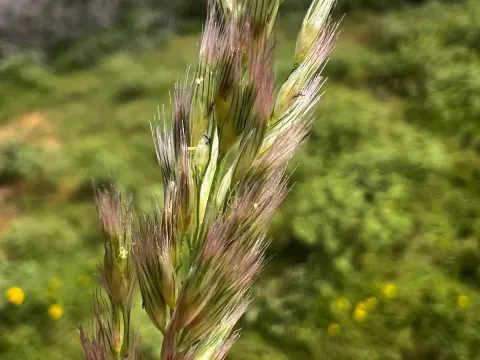
Harvesting Pappophorum seeds requires precise timing due to the natural unevenness of seed maturation. The crop is ready for harvest when the panicles turn a light straw color.
Combine harvesting is standard for seed production. The drum speed should be set to low to prevent mechanical damage to the small seeds, ensuring they remain viable for the next planting season.
Once harvested, the seed mass must be dried immediately to a moisture content of around 12% to prevent heating, mold development, and rapid loss of germination potential during storage.
Hay harvesting should be done using mowers equipped with conditioners, if possible, to accelerate the drying process and preserve the leaves, which contain the highest concentration of nutrients.
The aftermath (stubble) left after seed harvest can be used for light grazing. However, it should be carefully managed to ensure the grass is not overgrazed before the end of the growing season.