
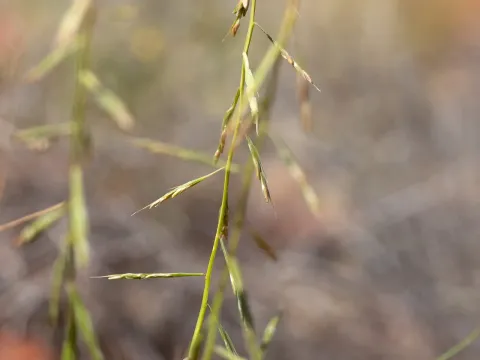
Paractaenum
Paractaenum
Paractaenum is a genus of grasses in the Poaceae family, primarily valued for its resilience in arid environments. Sowing should be timed to coincide with the onset of favorable moisture conditions, usually in the early spring, to allow for optimal establishment of the root system.
What the section contains

Paractaenum
Seeds should be shallowly buried in the soil, ideally at a depth of 1-2 cm, to ensure efficient germination. Given the small size of the seeds, a fine seedbed preparation is necessary to achieve uniform seedling emergence.
Row planting is the recommended method to facilitate weed control and ensure each plant has sufficient access to sunlight and nutrients. After sowing, light compaction of the soil is beneficial to improve seed-to-soil contact.
Early-stage development of Paractaenum is relatively slow, making the crop vulnerable to competition from aggressive weeds. Strategic use of herbicides or manual weeding in the first few weeks is essential for crop success.
Using high-quality seeds with high germination rates is crucial for establishing a dense and productive stand. Proper density helps in creating a closed canopy that suppresses weed growth naturally in subsequent seasons.
Paractaenum is highly adapted to well-drained, sandy, or loamy soils. It shows remarkable tolerance to drought conditions and is well-suited for regions with irregular rainfall patterns where other forage crops might fail.
This grass is sun-loving and requires full exposure to solar radiation for vigorous growth. Shading from trees or large structures significantly hinders the development of biomass and reduces the nutritional quality of the forage.
The crop can thrive in soils with neutral to slightly alkaline pH, including some mildly saline soils. This adaptability makes it an excellent candidate for restoring degraded pasture lands and improving soil stability.
Temperature requirements are generally aligned with temperate and subtropical climates. While it can withstand periods of extreme heat, it is not tolerant of prolonged waterlogging or poor soil drainage.
Minimal fertilization is often sufficient, although nitrogen applications during the active growth phase can boost yield significantly. However, excess fertilizer should be avoided to maintain the plant's natural hardiness.
The yield of Paractaenum depends heavily on environmental conditions and management intensity. As a forage source, it provides reliable biomass that is generally palatable to livestock when harvested at the right maturity stage.
The peak nutritional value of the foliage occurs before the flowering stage. Farmers aiming for high-quality hay should time their harvest before the plant allocates too much energy into seed production, which causes stalks to harden.
With proper rotational grazing management, Paractaenum stands can remain productive for several years. The plant's ability to regrow after grazing makes it a staple for sustainable pasture systems in dry climates.
In well-managed stands, the crop displays robust tillering, which fills in gaps in the pasture and maximizes the dry matter output per hectare. This density provides excellent ground cover, which also helps in preventing soil erosion.
Total yield is stable across years if the stand is not overgrazed. Monitoring the health of the root system is key to ensuring that the crop maintains its productivity level throughout its lifecycle.
Fungal diseases, particularly rusts and mildews, pose the greatest threat to Paractaenum, especially in regions with high humidity. Proper field sanitation and airflow management are primary tools for disease prevention.
Insect pests, such as aphids, can attack the crop during the peak growing season, causing leaf yellowing and stunted development. If populations reach an economic threshold, targeted insecticide application may be necessary.
Overgrazing is a significant threat that can lead to the thinning of the stand and loss of soil cover. Maintaining a proper stubble height after grazing is essential for the plant to recover and prevent weed encroachment.
Weed competition remains a challenge, particularly in the establishment phase. Integrating mechanical cultivation or pre-emergent weed control measures is often required to protect young Paractaenum plants.
Nematodes can occasionally affect root health in heavy or poorly managed soils. Crop rotation and maintaining soil biological health are effective preventative strategies for long-term pasture management.
Harvesting for hay should ideally occur at the late boot or early heading stage. Harvesting at this time balances biomass quantity with the nutritional quality, ensuring the forage remains digestible for animals.
Traditional mowing equipment can be used to harvest the grass. Following mowing, the forage should be dried in the field, with mechanical tedding used to promote uniform moisture loss before baling.
For grazing systems, controlled rotational grazing is recommended to ensure that the stand has adequate time to recuperate. This practice prevents exhaustion of the plant's carbohydrate reserves in the roots.
Harvesting seeds requires careful timing, as the seed heads are prone to shattering when fully mature. A two-stage harvest—mowing and windrowing—often reduces seed loss compared to direct combining.
Proper storage of harvested hay in ventilated, dry locations is essential to prevent heating and fungal growth. Keeping the bales off the ground and away from moisture will extend the storage life of the forage.