
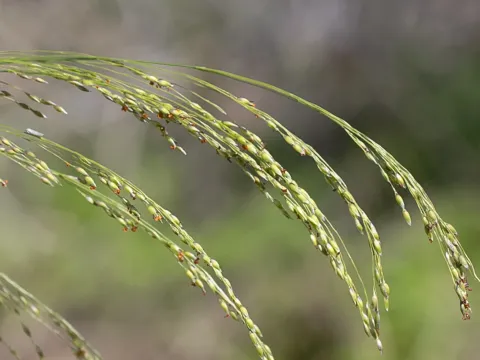
Panicum whitei
Panicum whitei
Panicum whitei is a perennial grass species belonging to the Poaceae family. In its natural habitat, it propagates effectively through seeds, but in agricultural settings, sowing schedules are aligned with the onset of the rainy season or the stabilization of warm weather conditions.
What the section contains
Panicum whitei
The optimal time for planting is when the soil temperature reaches 18-22 degrees Celsius. It is crucial to ensure sufficient soil moisture in the top layer, as the seeds require intimate contact with a moist substrate to initiate the germination process.
When used as a forage crop, planting is typically done in rows. The spacing between rows depends on the specific goals of the farmer, such as maximizing seed yield or producing green biomass for grazing.
In regions with distinct seasons, planting is planned so that the tillering phase aligns with peak sunlight, which significantly aids in the development of a robust root system and rapid biomass accumulation.
The crop demonstrates high biological plasticity, and given the correct temperature and moisture levels, seedling emergence usually occurs uniformly within 10 to 14 days after sowing.
This species is native to Australia and is exceptionally well-adapted to arid and semi-arid climates. It exhibits remarkable resilience to prolonged drought periods and high temperatures, making it a viable candidate for agriculture in water-scarce regions.
Panicum whitei is not overly demanding regarding soil type; it develops successfully on sandy, loamy, and even nutrient-poor soils. It prefers well-drained locations, as waterlogging is detrimental to its root system health.
The crop responds positively to moderate nitrogen fertilization during the early growth phases, although its deep root system allows it to efficiently extract necessary micronutrients from deeper soil horizons.
Sunlight is a critical factor for the plant's metabolism. As a light-loving species, Panicum whitei requires full exposure to the sun, as shading leads to reduced productivity and slowed physiological development.
Standard cultivation techniques include regular weeding and soil loosening between rows to prevent the formation of a soil crust, which can impede oxygen access to the roots in hot and dry climates.
The yield of green biomass depends directly on rainfall patterns and water availability throughout the growing season. Under favorable conditions, the crop can be harvested multiple times per season, highlighting its value as a source of high-quality forage.
Its biological properties allow the plant to recover quickly after intensive grazing, making it an essential component of pasture ecosystems in arid environments.
Agricultural use includes the production of hay and haylage. The nutritional value of the biomass remains high until the flowering stage, after which there is an increase in lignin content.
When grown for seed, yields can vary; however, the plant's ability to self-seed and regenerate naturally reduces the need for annual replanting, thereby lowering operational costs.
Total productivity of the stands is measured by both the tons of dry matter per hectare and the plant's ability to sustain grazing pressure while maintaining soil health and coverage.
Typical threats to the crop include fungal diseases that thrive in conditions of high humidity or poor air circulation within the canopy, such as various species of grass rust.
Among pests, the greatest threat is posed by insects that damage the generative organs and stems, specifically grasshoppers and certain types of aphids that commonly affect cereal crops.
Disease prevention is primarily based on maintaining optimal planting density, which prevents overcrowding and facilitates better airflow, reducing the humidity around the leaves.
Weed control during the early developmental stages is vital because young Panicum whitei seedlings have a slower initial growth rate and can be easily outcompeted by aggressive weed species.
Chemical intervention, such as the use of insecticides or fungicides, is only required in extreme cases, as the plant possesses a strong natural immunity to many pathogens present in its native range.
Harvesting for green biomass is conducted during the booting phase or early flowering, when the protein concentration in the leaves and stems is at its peak for livestock nutrition.
Mowing is performed using standard agricultural machinery, with the cutting height set at approximately 8-10 centimeters to ensure rapid regrowth of the aftermath.
The hay drying process requires careful management due to the density of the stems; therefore, pre-wilting in swaths is a common practice to ensure uniform moisture evaporation.
When harvesting seeds, it is important to time the operation correctly to prevent shattering, as Panicum whitei is prone to uneven ripening of the panicles, requiring careful observation of the lower leaves.
Post-harvest seed processing includes cleaning and drying to standard moisture levels, which ensures long-term storage stability and maintains the germination potential of the seeds.