
Pariana
Pariana
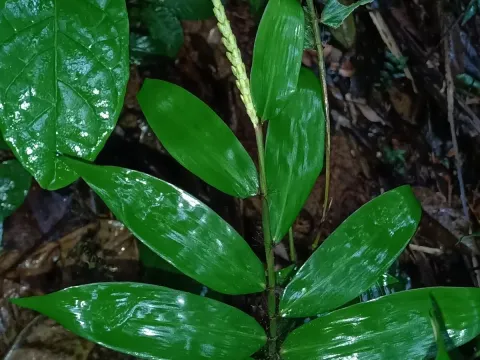
Pariana is a genus of perennial herbaceous plants belonging to the Poaceae family. These grasses are naturally found in the tropical rainforests of the Neotropics, where they serve as a unique component of the forest understory.
What the section contains
Pariana
The genus is well-adapted to low-light conditions, thriving in the shade provided by the tropical forest canopy. To maintain growth, the species requires high levels of atmospheric humidity and consistent moisture in the soil throughout the year.
Botanically, Pariana is distinct due to its broad, blade-like leaves that are uncommon among typical grasses. This unique leaf architecture allows the plant to maximize light capture in the deep, dim interior of tropical forests, functioning similarly to many marantaceous plants.
For successful growth, Pariana demands nutrient-rich, organic-based soils with excellent aeration and drainage. It is highly sensitive to cold stress and direct, intense sunlight, which can lead to leaf scorching and rapid dehydration.
While not a traditional agricultural crop in the economic sense, the study of Pariana provides critical insights into the diversity and evolutionary adaptations of the Poaceae family. Its propagation is generally limited to botanical collections and specialized research nurseries.
The primary threats to Pariana populations in their native habitat include deforestation and land conversion, which strip the plants of their necessary shade. Once exposed to direct sunlight, these specialized grasses cannot survive the resulting increase in ambient temperature.
Within indoor or greenhouse environments, the plants are susceptible to spider mites and mealybugs, which thrive in stagnant, dry air conditions. Additionally, overwatering in poorly ventilated substrates frequently results in root rot and fungal pathogen outbreaks.