
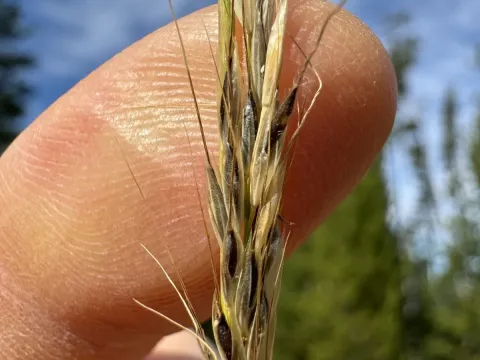
Nelson's needlegrass
Stipa nelsonii
Nelson's needlegrass (Stipa nelsonii) is a robust perennial grass species belonging to the Poaceae family. It is recognized for its significant resilience and ability to thrive in demanding environmental conditions, making it a valuable forage resource.
What the section contains
Nelson's needlegrass
Native to the mountainous regions of North America, this species has evolved to tolerate extreme temperature fluctuations and periods of low moisture. Its natural distribution demonstrates a high level of adaptability to various altitudes and topographical features.
The crop performs best in well-drained, sandy or loamy soils. It avoids areas prone to waterlogging or high moisture retention, as its root system requires adequate aeration to maintain vigorous growth throughout the growing season.
Climate requirements for Nelson's needlegrass involve temperate to cool conditions. It shows remarkable hardiness, surviving harsh winter conditions where many other perennial grasses might fail to survive or regenerate effectively.
Agronomic management of this species is relatively straightforward. While seedlings establish slowly, once mature, the plant is capable of persistent growth, provided the soil conditions are suitable for its deep and extensive root development.
The primary economic use of Nelson's needlegrass is as a forage crop. It serves as an excellent component for permanent pasture systems, providing high-quality biomass that is palatable to livestock during its vegetative stage.
As a hay crop, it produces nutritious fodder if harvested before the stalks become too fibrous. The protein content and digestibility make it an important feed source for cattle, sheep, and various wild ungulates in rangeland management.
Yield capacity is largely determined by environmental conditions such as seasonal rainfall and soil fertility. Though not as high-yielding as intensive annual silage crops, its stability in diverse environments offers a reliable feed base.
Beyond its feed value, the species plays a crucial role in soil conservation. Its dense root structure makes it highly effective for erosion control on slopes and for rehabilitating degraded soils in arid or mountainous regions.
Commercial seed production is an additional use, as there is an increasing demand for native grass species in ecological restoration projects aimed at biodiversity conservation and carbon sequestration.
The species is generally resistant to most common fungal and bacterial diseases that impact agricultural grasses. However, poor drainage during the seedling phase can make plants vulnerable to root rot pathogens.
Insect pests include aphids and various grass-feeding larvae that can damage the leaf blades or developing seed heads. Monitoring programs are recommended during high-growth periods to assess population levels if they approach damage thresholds.
Invasive weed encroachment is the primary management challenge during the initial establishment period. Lack of proper weed control during the first year often results in failed stands due to intense competition for light and nutrients.
Overgrazing is a major threat to the long-term sustainability of needlegrass stands. If livestock are allowed to graze the plants too early in the spring or too short during the summer, the plant reserves are depleted, leading to stand thinning.
Integrated management plans, which include rotational grazing schedules and balanced nutrient inputs, are essential for maintaining healthy, productive stands that remain resistant to biotic stressors over many growing seasons.