
Nevada bluegrass
Poa nevadensis
Description
Sowing dates
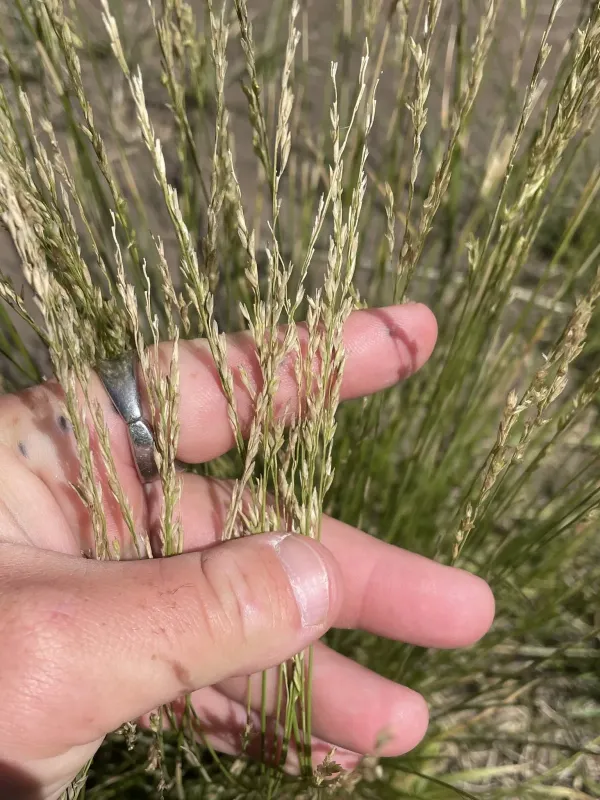
Nevada bluegrass (Poa nevadensis) is a hardy perennial grass belonging to the Poaceae family. Native to western North America, it is highly valued for its ability to thrive in diverse mountain and semi-arid environments.
The optimal time for sowing is early spring when the soil temperature begins to rise. This ensures adequate moisture for seed germination and early seedling development before the onset of summer drought.
Seeds should be planted at a shallow depth of approximately 1 to 1.5 centimeters. Proper soil-to-seed contact is essential for uniform emergence, which is typically achieved by light rolling after the sowing process.
While the initial growth rate is relatively slow, the plant establishes a deep and extensive root system by the end of the first season. This allows it to persist for many years in stable pasture conditions.
The seeding rate varies based on the intended use; however, it is commonly sown as part of a seed mixture to improve biodiversity and pasture longevity in arid ranges.
Growing requirements
Nevada bluegrass is well-adapted to well-drained loamy soils but shows remarkable tolerance to a wide range of soil textures, including those with moderate alkalinity.
One of the key agronomic advantages of this species is its excellent drought resistance. It can maintain productivity during periods where other cool-season grasses might enter dormancy.
The species is highly winter-hardy and capable of surviving extreme cold, making it an excellent candidate for regions with harsh winter climates.
Although it grows well in low-input systems, moderate fertilization, particularly with nitrogen, can significantly boost biomass yield in professional agricultural settings.
Adequate sunlight is required for optimal photosynthesis; therefore, it is best suited for open pastures rather than shaded areas where its growth could be suppressed.
Yield
The primary use of Nevada bluegrass is as a high-quality forage source for livestock. It is prized for its palatability and sustained nutrient density throughout the growing season.
In rotational grazing systems, the plant recovers quickly after grazing, provided that sufficient rest periods are implemented to allow the plants to replenish their root reserves.
When harvested as hay, the grass provides a balanced feed, although it is critical to time the harvest before seed head maturity to maintain maximum nutritional value.
Its deep root system also contributes to soil stabilization and erosion control, providing an ecological service alongside its agricultural production value.
Seed production is generally stable, but farmers should be cautious of seed shattering as the plant reaches full maturity, necessitating precise harvest timing.
Main diseases and pests
Like many grasses in the Poa genus, it can be susceptible to fungal diseases such as rust, especially in areas with high humidity and poor air circulation.
Powdery mildew may occur under crowded stand conditions, which can lead to leaf yellowing and reduced overall quality of the forage biomass.
Insect pests, including various species of grasshoppers and grain flies, can occasionally cause damage to seedlings or foliage during the peak growing season.
Integrated pest management, including regular monitoring and maintaining proper pasture height through controlled grazing, is the best strategy for disease prevention.
The species generally displays a robust natural defense mechanism, allowing it to remain productive without heavy reliance on chemical pesticides or fungicides.