
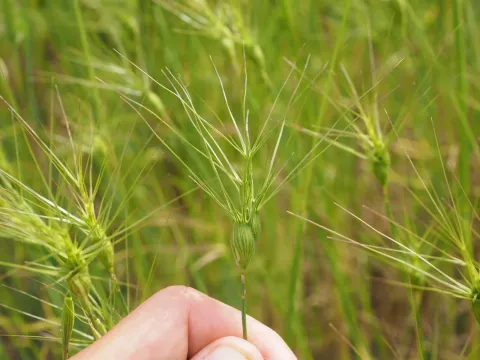
Neglected goatgrass
Aegilops neglecta
Neglected goatgrass (Aegilops neglecta) is an annual herbaceous plant belonging to the Poaceae family. It is recognized primarily as a wild relative of cultivated wheat, holding significant genetic potential for crop improvement programs worldwide.
What the section contains
Neglected goatgrass
The native range of this species spans the Mediterranean basin, the Caucasus, and parts of Central Asia. It thrives in diverse environments, often appearing in open steppe regions, rocky landscapes, and frequently within agricultural fields as a weed species.
The plant is characterized by its high adaptability to harsh environmental conditions. It shows remarkable tolerance to drought and can thrive on poor, stony, or calcareous soils where conventional cereal crops struggle to establish and maintain productivity.
Botanically, Aegilops neglecta produces a compact spike that disintegrates into individual segments upon maturity. This adaptation ensures effective seed dispersal and survival in natural habitats, although it presents challenges for agricultural management and weed control.
In terms of agricultural use, this species is highly valued as a genetic resource. Plant breeders utilize its resilience to abiotic stresses, such as salinity and extreme temperatures, to enhance the stress tolerance of commercial bread wheat varieties.
Common diseases affecting Aegilops neglecta include various fungal pathogens such as rusts (Puccinia spp.) and powdery mildew. These diseases are favored by humid conditions and can affect the vitality of wild populations and nearby crops.
When present in cereal crops, neglected goatgrass acts as a competitive weed. Its ability to extract soil nutrients and water efficiently allows it to suppress the growth and development of primary crops, leading to significant yield losses in infested areas.
Insect pests, such as cereal aphids and Hessian flies, may colonize the plants during the vegetative stages. These pests can reduce plant vigor and facilitate the transmission of viral diseases within the field environment.
Managing this species is complex due to its close biological relationship with cultivated wheat. Chemical control measures effective against goatgrass often mirror the constraints found in wheat production, requiring highly selective herbicides to protect the main crop.
Integrated weed management remains the most effective strategy. This involves the use of certified wheat seeds, precise crop rotation, and mechanical weeding techniques to prevent the build-up of the soil seed bank and minimize field infestation.