
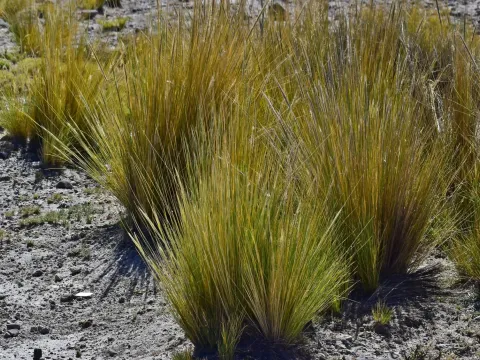
Ichu grass
Stipa ichu
Stipa ichu, commonly known as Ichu, is a resilient perennial grass of the Poaceae family native to the high-altitude regions of the Andes. Successful propagation is typically achieved through direct seeding at the onset of the rainy season.
What the section contains
Ichu grass
For agricultural cultivation, seeds should be sown in a well-prepared seedbed when soil temperatures consistently reach at least 10–12 degrees Celsius. Shallow sowing at a depth of 1–2 centimeters is critical for germination.
The establishment phase of this crop is slow, as the plant prioritizes deep root system development during its first year of growth. This investment is what grants the mature plant its legendary drought and frost tolerance.
When seeding in larger areas, row spacing of approximately 30 centimeters is recommended to ensure adequate resources for each plant cluster. Proper site selection is vital, as this plant thrives in open areas with high solar exposure.
Seed quality should be verified to ensure high purity, as the small size of the seeds makes them susceptible to contamination from various weed species that could outcompete them during early development.
Stipa ichu is highly adapted to extreme highland conditions, including thin air, high solar radiation, and drastic temperature fluctuations. It requires full sunlight to achieve optimal photosynthetic activity.
Regarding soil, the species prefers light, well-draining textures such as sandy loams or rocky substrates. It is extremely sensitive to waterlogging, which often leads to root rot in poorly drained agricultural plots.
The plant is highly drought-tolerant, exhibiting xerophytic adaptations such as leaf curling to minimize water loss. It survives effectively in arid regions where other forage grasses would fail.
Highland climates are ideal for Stipa ichu, particularly at altitudes between 3000 and 4500 meters above sea level. In these regions, it serves as an essential component of the natural landscape.
Minimal nitrogen application is required, as the plant is adapted to nutrient-poor soils. Excessive fertilization can negatively impact the plant’s structural integrity and its natural ability to resist cold.
The biomass yield of Stipa ichu is inherently linked to precipitation and environmental conditions. Average yields range between 1.5 and 3.5 tons of dry matter per hectare in managed grassland systems.
As a forage source, it is highly fibrous. While not suitable for most cattle, it serves as a critical food source for Andean camelids like alpacas and llamas, which possess specialized digestive tracts.
Peak biomass accumulation occurs by the third year, when the plant matures into large, dense tussocks. Ongoing research is exploring selective breeding for softer leaf textures to improve overall feed utility.
When considering its agricultural value, yield should be measured not only by fodder output but also by the plant’s effectiveness in soil stabilization and preventing water erosion on sloping landscapes.
Proper management of the grazing intensity is essential to ensure sustainable yields over many years, as overgrazing can lead to the removal of the root base and permanent destruction of the sward.
Stipa ichu possesses an excellent natural defense mechanism against many pathogens due to its high silica content, which makes it tough and less appealing to common agricultural pests.
Fungal diseases like rust or mildew may occur if the plant is grown in overly humid conditions or in poorly ventilated areas. Maintaining appropriate spacing is the most effective preventative measure.
The main threats to plantations include soil-dwelling insects and rodents that may feed on the roots during early growth stages. Monitoring the base of the plant is recommended during the first two seasons.
Anthropogenic pressure, specifically uncontrolled livestock trampling, represents the most significant threat to the longevity of the plant clusters, potentially leading to widespread soil degradation.
Integrated pest management strategies focusing on mechanical control and rotational grazing are recommended to protect the integrity of the grass stands and maintain long-term production.
The harvesting of Stipa ichu for industrial or fodder use is best conducted after the flowering phase, ensuring that the plant has stored sufficient nutrients without becoming overly lignified.
Manual harvesting using traditional tools remains common due to the plant’s tendency to grow in difficult, rocky terrain where heavy machinery would be impractical or damaging to the landscape.
For forage, the grass should be cut at a height of 10–15 centimeters above the ground to allow for rapid regrowth of the crown in the following season.
Post-harvest, the material must be thoroughly dried in the sun to ensure moisture levels drop sufficiently for safe storage. Improper drying will quickly lead to fungal contamination of the bales.
Dry storage must be in a facility that protects the material from rain and high humidity while allowing airflow to prevent self-heating, which can be a risk for tightly packed forage stacks.