
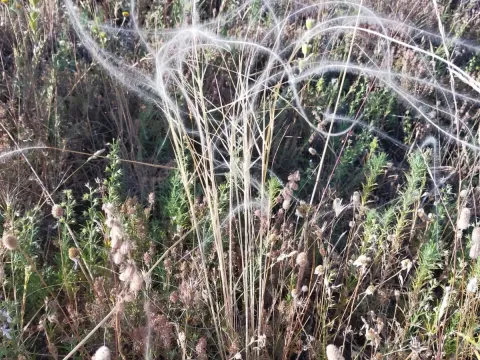
Iberian feather grass
Stipa iberica
Stipa iberica is a perennial herbaceous plant belonging to the Poaceae family. In its natural habitat, the seeds germinate primarily during the autumn or early spring, leveraging the moderate temperatures that characterize its native steppe regions.
What the section contains
Iberian feather grass
When cultivated for agricultural purposes or land restoration, sowing is typically performed in late autumn or early spring. The seeds must be shallowly sown, as their limited energy reserves are insufficient to penetrate deep soil layers.
Stratification of seeds under natural or controlled conditions significantly improves germination rates. Post-sowing, rolling the soil is an essential practice to ensure optimal contact between seeds and the soil, preventing moisture loss in the top layer.
Seedlings exhibit slow initial development, focusing resources on the establishment of a robust root system. This strategy ensures long-term survival in arid environments but necessitates weed control during the initial stages of field establishment.
The seeding rate is determined by the intended use of the land. For pasture or forage production, optimal spacing is required to ensure that plants have sufficient access to nutrients and water without excessive inter-species competition.
This species is highly heliophilous and requires full exposure to sunlight. Shaded areas significantly inhibit the growth and development of reproductive shoots, reducing the overall vitality of the plant population.
As a xerophyte, Iberian feather grass is exceptionally drought-tolerant. It thrives in well-drained, nutrient-poor, and stony or sandy soils where typical agricultural crops would fail to establish a stable canopy.
The primary soil requirement is excellent drainage. The species is highly sensitive to waterlogging, which can cause root rot and rapid decline of the stand. Neutral to slightly alkaline soil pH is preferred for optimal growth.
Low soil fertility is not a limiting factor for this species; in fact, the application of high doses of fertilizers is often detrimental as it alters the ecological balance of the rhizosphere and promotes competitive weeds.
Temperature resilience is a key characteristic, with the plant capable of withstanding extreme daily and seasonal fluctuations. This makes it a reliable choice for regions with harsh, continental climates and high environmental stress.
Iberian feather grass is not typically grown for high biomass yield. Its productivity is modest, reflecting its adaptation to survive in harsh, resource-limited steppe conditions rather than intensive agricultural environments.
The utility of the plant lies in the nutritional value of its forage during the early vegetative phase. It provides essential amino acids and micronutrients that are beneficial for grazing livestock in extensive farming systems.
Productivity is highly dependent on rainfall distribution. In years with adequate spring moisture, the biomass production increases, allowing for limited hay harvesting while maintaining the health of the perennial stand.
For sustainable usage, it is critical to balance grazing intensity with the plant's recovery capacity. Overgrazing can deplete root reserves and lead to the replacement of the species by less desirable, opportunistic weeds.
Seed yield remains consistent if environmental conditions are favorable during the flowering period. Due to the natural seed dispersal mechanism, harvesting must be timed accurately to prevent significant field losses.
The species is susceptible to various insect pests, particularly those that feed on stems and reproductive parts, such as cereal beetles and certain types of thrips. Monitoring in late spring is advised to mitigate damage.
Fungal diseases like rust and smut may occur under conditions of high humidity or poor aeration. Maintaining optimal plant density and ensuring good soil drainage are the most effective preventative measures.
Root rot is primarily a threat in over-compacted soils or areas with poor water management. Avoiding excessive mechanical traffic on the field helps preserve soil structure and root health.
Weed competition is the primary risk during the first year of establishment. Mechanical weeding or careful site selection before sowing is essential to allow the slow-growing seedlings to become dominant in the stand.
Livestock safety is a concern during the seed maturation phase, as the sharp awns of the feather grass can cause oral or skin injuries to animals. Rotational grazing schedules must account for this development cycle.
Harvesting for hay should occur at the onset of the heading stage. This timing captures the highest nutritional value before the stems become highly lignified, ensuring better palatability for livestock.
Drying the harvested material should be managed carefully to preserve the green color and nutritional profile. Slow drying in swaths is preferred to prevent nutrient leaching and microbial growth.
For seed production, mechanical harvesting requires specific settings to minimize damage to the delicate awns. Modern combines with adjusted cylinder speeds are necessary to ensure the integrity of the collected material.
Grazing management involves maintaining an appropriate stubble height to support the plant's ability to regenerate. Leaving sufficient vegetative cover after grazing is essential for winter survival and spring regrowth.
Consistent adherence to these harvest and management protocols ensures the long-term sustainability of Iberian feather grass stands, preventing soil degradation and promoting biodiversity in pasturelands.