
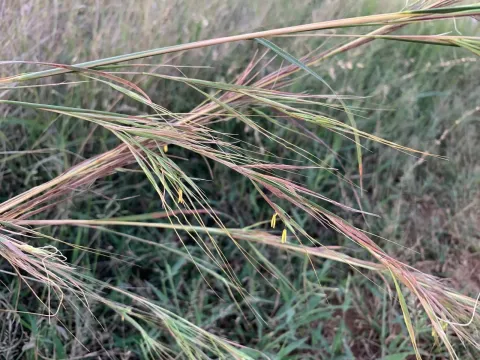
Hyperthelia
Hyperthelia
Hyperthelia is a genus of perennial grasses belonging to the Poaceae family. Primarily found in tropical and subtropical regions of Africa, these grasses are recognized for their significance in natural grasslands and their potential as high-yielding forage crops.
What the section contains

Hyperthelia
The plant is biologically adapted to thrive in climates with distinct wet and dry seasons. It features a robust root system, which allows it to maintain productivity even when surface water availability is limited, provided the soil is well-drained.
For optimal growth, Hyperthelia requires well-aerated, fertile soils. It thrives in open, sunny environments and does not tolerate waterlogging, making proper field selection and site preparation essential for establishing healthy stands of this grass.
Botanically, the species is characterized by its elongated leaves and sturdy culms. It has the ability to undergo rapid vegetative regrowth after harvesting or grazing, which is a desirable trait for intensive agricultural production systems.
The primary use of Hyperthelia is for livestock feed. Its nutritional profile, when managed under appropriate fertilization and cutting regimes, provides a valuable source of energy and protein for ruminant animals in arid and semi-arid environments.
Hyperthelia crops are susceptible to various pests, particularly insects that feed on the foliage. Monitoring programs are essential to detect outbreaks of grasshoppers and other pests that can rapidly reduce the biomass of a pasture.
Fungal pathogens such as leaf rusts can impact the quality and quantity of the forage if climatic conditions favor pathogen growth. Strategies to manage these threats include maintaining optimal plant density and avoiding over-irrigation.
Soil-borne diseases may occasionally affect the root systems, particularly in compacted or poorly drained soils. Improving soil structure and avoiding machinery traffic during wet periods can significantly mitigate these risks.
Competition from invasive weeds during the establishment phase is a major threat to young Hyperthelia stands. Proper land preparation and selective weeding are critical to ensuring the crop successfully establishes and dominates the area.
Integrated pest management (IPM) practices, including the selection of resistant cultivars and mechanical control methods, are recommended to maintain the productivity and longevity of Hyperthelia-based forage systems.