
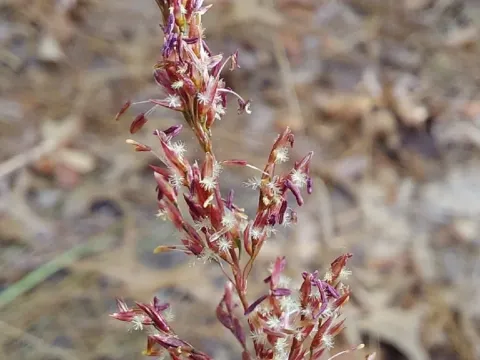
Pineywoods dropseed
Sporobolus junceus
Pineywoods dropseed (Sporobolus junceus) is a perennial grass species belonging to the Poaceae family. It is native to the southeastern regions of the United States, where it thrives in various open habitats and pine forests.
What the section contains
Pineywoods dropseed
The plant is characterized by its adaptability to low-nutrient soils, including sandy, rocky, and acidic conditions. Its deep root system allows it to survive in environments where other grasses might fail to establish themselves.
A key biological requirement for this species is full sun exposure. While it is highly drought-tolerant, its growth rate and vitality are significantly reduced in shaded environments or high-humidity areas with poor soil drainage.
Soil structure should be well-drained to ensure long-term plant health. Though it can tolerate periods of moisture, it is not an aquatic or semi-aquatic plant and will suffer from root rot if standing water persists for too long.
Cultivation practices are relatively straightforward, as the plant is considered low-maintenance. Fertilization is generally not required and can even be detrimental to the native characteristics of the grass.
The primary use of Sporobolus junceus is for land restoration, erosion control, and ornamental gardening. Its ability to stabilize soil makes it a valuable asset for maintaining slopes and natural meadow landscapes.
In ornamental applications, it is valued for its fine, slender foliage and delicate flowering panicles. It provides excellent texture in native plant gardens and serves as an important resource for local wildlife.
Harvesting for maintenance usually involves cutting back the dead biomass in late winter or early spring. This allows the plant to flush with new, vibrant growth as the warming season begins.
Seed collection requires careful observation as the grain matures. Because the seeds are small and prone to shattering, they should be harvested when the panicles turn a light, dry color and before they fall to the ground.
Storage of the collected seed should be done in a cool, dry place. Using breathable bags or containers helps maintain seed viability for several seasons, ensuring a high germination rate when sown in prepared soil.