
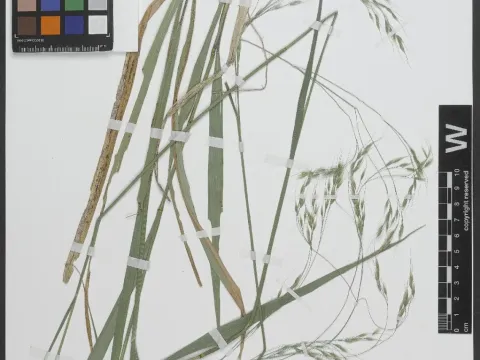
Piptatherum paradoxum
Piptatherum paradoxum
Piptatherum paradoxum is a perennial grass that typically requires early spring sowing to take advantage of soil moisture reserves accumulated during winter.
What the section contains
Piptatherum paradoxum
The seeding depth should be shallow, generally between 1 and 2 centimeters, to ensure that the small seeds have enough energy to emerge efficiently.
Seedbed preparation must be thorough, focusing on soil firming to promote capillary movement of water to the seeds, which is crucial for uniform germination.
Depending on the intended use, row spacing can vary, but standard grain drills are usually effective for establishing solid stands for forage or seed production.
Sowing in autumn is possible in regions with mild winters, which allows the seedlings to establish a deep root system before the onset of the summer heat.
This species thrives in well-drained, fertile soils ranging from sandy loams to silty clay types, avoiding sites prone to waterlogging or heavy compaction.
Piptatherum paradoxum is known for its resilience and ability to grow in various climates, showing significant adaptation to temperate environmental conditions.
Adequate sunlight is essential for optimal development, and the species generally performs poorly in heavy shade or beneath dense forest canopies.
While relatively drought-tolerant once established, the plant shows increased biomass production when supplied with moderate rainfall during the vegetative stages.
Soil pH should ideally be neutral or slightly alkaline, as highly acidic conditions can severely restrict nutrient uptake and overall plant vigor.
The potential yield of this crop depends heavily on site selection, soil fertility, and the frequency of harvesting throughout the growing season.
In managed agricultural systems, proper fertilization, particularly with nitrogen, can significantly boost the leaf-to-stem ratio and overall dry matter yield.
Management practices that allow the plant to achieve full physiological maturity are necessary if the primary goal is seed production rather than forage.
Multiple cuts per season are possible under favorable moisture conditions, provided that a sufficient regrowth period is allowed between harvests to replenish root reserves.
Long-term stand productivity typically peaks in the second or third year, requiring appropriate management to prevent thinning and weed encroachment.
Fungal pathogens such as rusts and mildews can affect the foliage, particularly in humid or stagnant air conditions that promote spore germination.
Common insect pests include various species of grass-feeding beetles and aphids, which can cause direct damage to the leaves or stunted growth of seedlings.
Integrated pest management, including crop rotation and the selection of disease-resistant varieties, is recommended to mitigate the impact of biological threats.
Weed competition during the seedling stage is a significant risk; therefore, pre-emergence management is vital to ensure the stand establishes successfully.
Monitoring for signs of root rot or crown infection is important, as these can lead to premature stand decline and reduced longevity of the crop.