
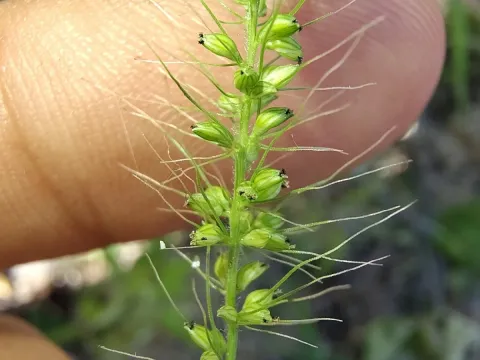
Grisebach's bristle grass
Setaria grisebachii
Grisebach's bristle grass (Setaria grisebachii) is a member of the Poaceae family, known for its adaptability in various North American ecosystems. As an annual grass, it displays vigorous growth patterns during the warmer months of the year.
What the section contains
Grisebach's bristle grass
The plant is categorized as a C4 species, meaning it excels in high-temperature environments and utilizes solar energy with high efficiency. This trait allows the grass to flourish in open, arid areas where competition for resources might otherwise be intense.
In terms of soil requirements, it is adaptable to a wide range of substrates, although it demonstrates a preference for well-drained sandy or loamy soils. It displays a notable tolerance for nutrient-poor conditions, often being one of the first species to colonize disturbed land.
Agrotechnical management requires a deep understanding of its life cycle, as it produces numerous seeds that can persist in the soil bank. Monitoring soil moisture and nutrient levels can help in determining the competitive strength of the plant within a field.
Morphological features such as its stiff bristles and compact inflorescences make it distinct from other Setaria species. These structures are evolutionary adaptations that provide protection against herbivores while facilitating seed dispersal through various mechanisms.
The health of Grisebach's bristle grass is frequently challenged by fungal pathogens, specifically rusts which can significantly inhibit the development of the plant foliage. These infections often spread rapidly in humid conditions.
Smut fungi represent another major threat, particularly during the reproductive phase. By infecting the panicle, these fungi prevent the maturation of seeds, thereby disrupting the survival cycle of the species in certain regions.
Pest pressure is often attributed to aphids and various grass-feeding larvae. These insects feed on the succulent tissues of the grass, often weakening the stems and leaving the plant vulnerable to secondary bacterial or viral infections.
The grass is also known to serve as an alternative host for certain plant viruses that can affect high-value cereal crops. This ecological role makes it a significant species of interest for integrated pest management programs.
Effective control strategies involve managing the field borders and implementing mechanical weeding during early development stages to reduce the total load of pathogens and pests within the farm environment.