
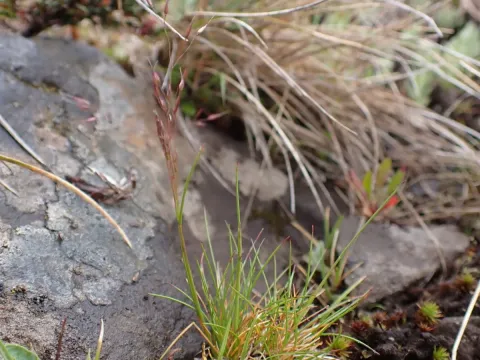
Graceful bentgrass
Agrostis venusta
Graceful bentgrass (Agrostis venusta) is a perennial grass belonging to the Poaceae family. This species is recognized for its fine texture and ability to form a dense, uniform stand.
What the section contains
Graceful bentgrass
The optimal sowing time for this culture is during the early spring or autumn months, which ensures that the seeds germinate under favorable moisture and temperature conditions.
Successful establishment requires a fine, firm seedbed, as the seeds are extremely small and need constant contact with soil moisture to initiate the germination process.
Mechanical sowing drills are typically used to distribute the seeds evenly, followed by light harrowing or rolling to cover the seeds at an appropriate shallow depth.
Establishing a new stand often takes several weeks, during which consistent irrigation is essential to prevent the drying out of the fragile seedling root systems.
This species thrives in temperate climates and prefers soils that are consistently moist, though it can tolerate a wide variety of soil types ranging from sandy loams to heavier clays.
Agrostis venusta performs best when the soil reaction is near-neutral, although it exhibits significant adaptation to slightly acidic environments commonly found in nature.
Adequate sunlight is required for the vigorous growth of this grass, although it possesses a degree of shade tolerance compared to other common pasture or turf species.
Nutrient management is crucial, with regular applications of nitrogen-based fertilizers recommended to support leaf production and rhizome development during the growing season.
Management practices also include controlled mowing regimes that promote denser tillering and prevent the plants from becoming overly tall and prone to lodging.
The culture is susceptible to various fungal pathogens, specifically rust diseases and leaf spots, which typically appear during periods of high humidity and stagnant air.
Soil-borne pests and larvae, such as wireworms, can occasionally compromise the root system, potentially leading to patches of thinning or plant mortality in large fields.
Preventive management involves ensuring proper field drainage and avoiding excessive nitrogen applications, which can increase the vulnerability of the grass to certain infections.
Monitoring the plant stand for early signs of disease is a standard agricultural practice that allows for the timely application of systemic fungicides when necessary.
By implementing integrated pest management, growers can effectively minimize the impact of biotic stresses and ensure the longevity and health of the Agrostis venusta crop.