
Sasa
Sasa hybrids
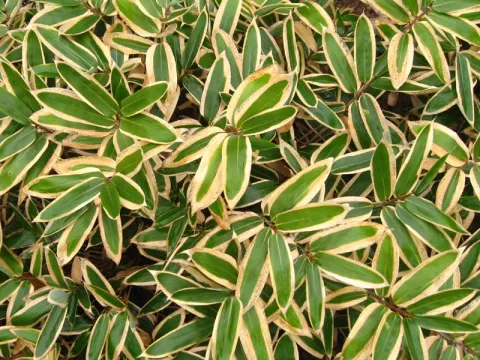
Sasa is a genus of low-growing, evergreen perennial plants belonging to the Poaceae family, specifically the bamboo subfamily. Unlike taller bamboo varieties, Sasa plants are known for their shrub-like appearance and dense, leaf-heavy growth pattern.
What the section contains
Sasa
Originating primarily from East Asia, including Japan and the Kuril Islands, Sasa is highly valued for its cold tolerance. This trait makes it a sought-after plant for temperate gardens where other tropical or subtropical bamboos would not survive the winter season.
Cultivation of Sasa requires fertile, well-draining soil that retains sufficient moisture. While the plants are adaptable, they thrive best in partial shade, where their broad, glossy leaves remain protected from scorching sun and excessive wind exposure.
A crucial aspect of managing Sasa is its aggressive rhizome growth. Gardeners must implement root barriers at the time of planting to prevent the plant from spreading uncontrollably throughout the garden landscape and overtaking neighboring ornamental species.
In terms of usage, Sasa is primarily deployed as an effective ground cover. Its dense foliage creates a lush, green carpet that suppresses weeds and adds a naturalistic, woodland aesthetic to various garden styles, including Japanese-inspired landscapes.
The primary threats to Sasa plants include fungal diseases such as leaf rust and spot, which are often triggered by poor air circulation and excessive humidity. Maintaining proper spacing and thinning out dense clusters can significantly reduce the risk of outbreaks.
Insect pests, most notably spider mites and aphids, frequently infest Sasa, especially during hot and dry weather. These pests suck the sap from the undersides of the leaves, eventually causing yellowing, leaf drop, and overall weakening of the plant.
Integrated pest management is recommended for Sasa, starting with consistent monitoring of leaf health. If pest populations exceed threshold levels, the application of horticultural soaps or specific miticides may be necessary to control the infestation.
Good cultural practices, such as removing dead biomass in the early spring, are essential for plant health. Cleaning up the base of the bamboo helps prevent the buildup of decaying organic matter, which can serve as a reservoir for spores and pests.
By providing the right balance of light, water, and air circulation, gardeners can keep Sasa healthy and vigorous. A well-maintained Sasa planting is resilient and provides a high level of aesthetic value with minimal long-term interventions.