
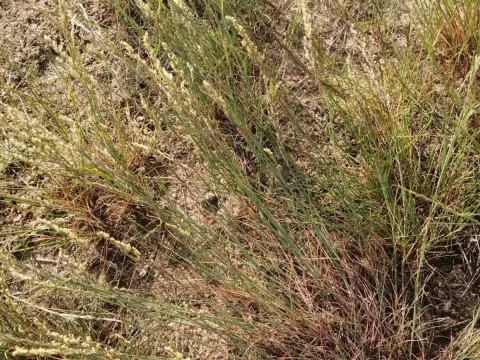
Poa versicolor
Poa versicolor
Poa versicolor is a perennial grass species belonging to the Poaceae family. Native to steppe regions, this plant is well-adapted to surviving in harsh climates where environmental variability is high.
What the section contains
Poa versicolor
The optimal time for sowing is during early spring or late autumn. Sowing in these periods allows the seeds to benefit from adequate moisture, which is essential for uniform germination and initial establishment in the field.
The seeds should be sown at a shallow depth of approximately 1-2 centimeters. Due to the small size of the seeds, achieving good soil-to-seed contact via light rolling is highly recommended to ensure proper hydration.
In newly established stands, seedling vigor is relatively modest, meaning that careful site preparation and weed suppression are required during the first year of growth to ensure a healthy population.
Once established, the plant spreads through a combination of seed production and the development of a dense root system. This makes it a reliable species for long-term pasture restoration and soil stabilization projects.
Poa versicolor is characterized by its high ecological plasticity and drought tolerance. It thrives in fertile steppe soils, including chernozems and chestnut soils, where it can utilize its deep root system to access water during dry spells.
The species demonstrates excellent winter hardiness, allowing it to withstand extreme temperature fluctuations and cold winter conditions typical of its native habitat. This resilience is supported by specialized physiological dormancy phases.
While the plant prefers sunny, open environments, it shows a remarkable ability to adapt to moderate soil salinity. This makes it an ideal candidate for reclaiming or improving degraded land where more sensitive crops might fail.
Optimal growth is observed in well-drained soils. However, the plant is adaptable enough to survive in various soil structures, provided that the risk of prolonged waterlogging is minimized to prevent root damage.
Adequate management, including the balanced application of fertilizers—specifically phosphorus and potassium—helps improve the structural integrity of the plant's roots and enhances its overall productivity in pasture settings.
The biomass yield of Poa versicolor depends heavily on environmental conditions and soil fertility. It is a long-lived perennial that provides a consistent source of forage once the stand has fully matured.
Nutritional value peaks during the early heading stage. During this phase, the grass provides high-quality forage containing the essential proteins and carbohydrates required for livestock development.
As a pasture grass, Poa versicolor is noted for its ability to recover rapidly after grazing. This regrowth potential is a significant advantage for rotational grazing systems, allowing for sustained productivity throughout the grazing season.
Seed harvesting requires careful timing because of the asynchronous maturation of the seed heads. Farmers often look for specific indicators of ripeness to ensure that the maximum yield of viable seeds is collected.
Incorporating this species into forage grass mixtures contributes to overall field durability. Its tendency to form a dense sward helps protect the soil surface from erosion caused by heavy livestock traffic and wind.
Common plant diseases, such as rust and powdery mildew, are the primary biological threats to Poa versicolor. These fungal pathogens typically flourish in dense stands with high humidity, potentially affecting the quality of the green mass.
Insect pests, including cereal flies, can cause damage to developing stems and reproductive structures. Integrated pest management strategies, focusing on optimal planting dates and crop rotation, are essential for mitigation.
Weed competition poses a significant threat during the early establishment phase. Regular mowing or the strategic use of selective herbicides can help protect young seedlings until they are strong enough to dominate the area.
Root rot, driven by stagnant water or poor drainage, can severely impact plant health. Choosing fields with proper slopes or adequate water drainage is a key agronomic step for long-term success.
Regular monitoring of the pasture throughout the growing season is crucial. Early detection of pests or pathogens allows for swift intervention, which is far more efficient than attempting to treat an established outbreak.