
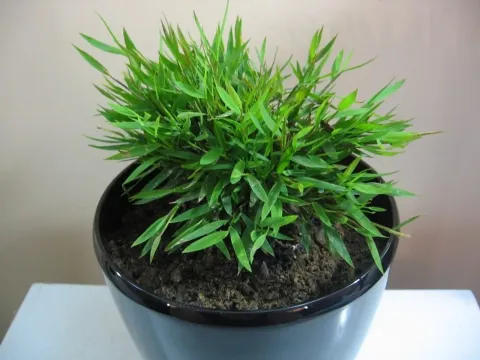
Pogonatherum
Pogonatherum P. Beauv.
Pogonatherum is a genus of perennial grasses belonging to the Poaceae family. The most commonly cultivated species, Pogonatherum paniceum, is widely recognized as a decorative plant frequently referred to as miniature or indoor bamboo due to its appearance.
What the section contains


Pogonatherum
The plant originates from the tropical regions of Asia, specifically inhabiting areas of Southeast Asia, China, and India. It naturally flourishes in high-humidity environments, often found growing near water sources and in shaded tropical forest edges.
Cultivation requires strict adherence to irrigation schedules, as the plant is highly sensitive to substrate desiccation. In an agricultural setting, maintaining constant moisture in the root zone is paramount for preventing foliage desiccation and wilting.
The soil should be nutrient-rich, light, and well-drained to ensure healthy root development. A mixture that retains moisture while allowing excess water to drain freely is essential to avoid physiological stress and root zone asphyxiation.
Light intensity plays a crucial role in the development of the plant, which performs best under bright but diffused light. Excessive exposure to direct sun radiation often leads to leaf discoloration and stress in the plant's photosynthetic system.
The most significant pest threats include spider mites, which thrive in environments where ambient humidity is not managed correctly. Integrated pest management strategies, such as biological control or targeted acaricide application, are necessary to mitigate infestations.
Pathological issues are typically related to water management, with root rot being the most common disease. This occurs when the substrate remains saturated for too long, encouraging fungal growth that destroys the root system and halts nutrient uptake.