
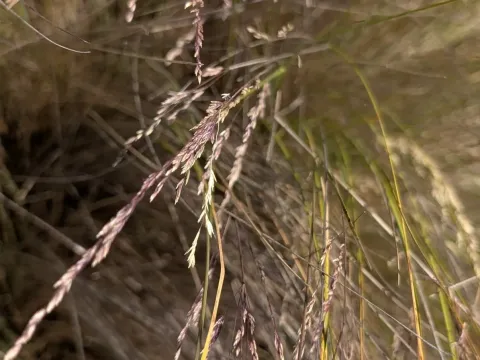
Poa labillardierei
Poa labillardierei
Poa labillardierei, commonly known as the common blue tussock grass, is a robust perennial plant belonging to the Poaceae family, native to the diverse landscapes of Australia.
What the section contains
Poa labillardierei
The plant thrives in full sun to partial shade and is highly adaptable to various moisture levels, showing a remarkable tolerance for periodic dry spells.
It prefers well-drained, nutrient-rich soils, though it demonstrates resilience in a variety of soil textures, ranging from sandy loams to heavier clays.
Climatically, it is suited to temperate regions, displaying significant tolerance to frost and cold snaps while maintaining its structure throughout the seasons.
Agronomic management requires minimal intervention once established; however, periodic removal of dead foliage is recommended to maintain the aesthetic and health of the tussock.
The primary use of Poa labillardierei is in landscape architecture, where its elegant, dense habit makes it a popular choice for native garden displays.
Due to its dense root system, it is an excellent candidate for erosion control, soil stabilization on embankments, and ecological restoration projects.
In agricultural contexts, it is increasingly studied as a source of long-term fodder for low-intensity grazing systems, providing green biomass when other grasses go dormant.
Seed harvesting should occur when the seed heads reach maturity, typically identified by the change in color to a straw-like tone, ensuring maximum seed viability.
Field maintenance involves periodic thinning or controlled burning to prevent the accumulation of dry matter and to promote vigorous regrowth in the following cycle.
The plant is susceptible to various fungal pathogens, particularly rust diseases, which tend to proliferate in conditions with high humidity and poor airflow.
Soil-borne pests can pose a significant challenge, especially during the early stages of establishment, as larvae may feed on the developing root crowns.
To mitigate these risks, it is essential to ensure adequate spacing between individual plants to prevent the creation of a microclimate conducive to disease development.
Monitoring the plant for signs of stress is crucial, as environmental stressors often precede secondary infestations by pests or pathogenic fungi.
Integrated weed management is necessary to reduce competition during the early establishment phase, as the grass is slow to mature and can be easily outcompeted.