
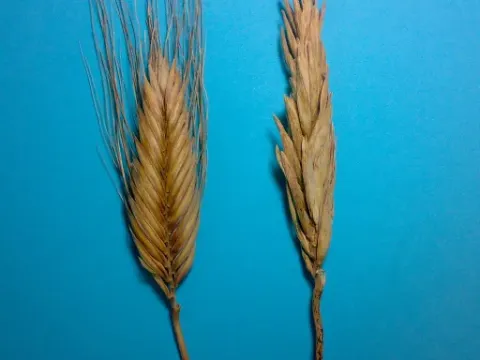
Polish wheat
Triticum polonicum
Polish wheat (Triticum polonicum) is a distinct species of ancient cereal grain belonging to the Poaceae family. Despite its common name, it is native to the Mediterranean region and parts of the Middle East, rather than Poland.
What the section contains
Polish wheat
This crop is typically grown as a spring annual, requiring a consistent growing season to reach full maturity. Sowing should occur early in the spring, once the danger of severe frost has passed and soil temperatures allow for active germination.
Farmers should focus on seedbed preparation to ensure a fine, firm soil structure. Sowing depth is generally recommended between 4 to 6 centimeters, allowing for strong initial root establishment.
The spacing between rows should be optimized to allow for adequate ventilation and sunlight penetration, which helps in reducing the humidity within the plant canopy.
Choosing high-quality, disease-free seed is essential for maintaining the purity of this ancient grain variety and ensuring robust development of the plants from the start of the season.
Triticum polonicum thrives in fertile, well-drained loamy soils with a near-neutral pH level. It does not tolerate waterlogged areas, which can lead to root system decay.
The crop requires sufficient sunlight throughout its growth cycle to support the production of its characteristic long, slender ears. It is sensitive to environmental stressors like extreme drought or prolonged cold snaps.
Proper nutrient management is vital. A balanced application of nitrogen, phosphorus, and potassium supports both vegetative growth and grain fill without promoting excessive lodging.
The climate should provide a stable, warm temperature regime during the heading and maturation phases, which is critical for ensuring the overall grain quality and weight.
In regions with heavy rainfall, additional attention to drainage is required to ensure that the soil remains oxygenated, supporting the health of the plant's root system.
The primary threats to Polish wheat include fungal diseases such as wheat rust, powdery mildew, and head blight, which can significantly reduce both quality and yield if not monitored.
Pest management is crucial, as the crop can be vulnerable to cereal leaf beetles and aphids, especially during the early stages of grain development and plant growth.
Adopting an integrated pest management (IPM) approach, including the rotation of crops and the use of certified seed, is the most effective way to minimize chemical dependence.
Weeds often compete for nutrients and moisture; therefore, timely mechanical or chemical weed control measures must be implemented during the early stages of the crop's development.
- Regular monitoring of fields for signs of pathogen pressure.
- Use of resistant varieties where available.
- Proper storage conditions to prevent post-harvest mold and insect infestations.
Harvesting Triticum polonicum requires precise timing when the crop reaches full maturity. The grains should be dry, with moisture levels typically checked before proceeding.
The distinct morphology of the ears, which are long and fragile, necessitates careful setting of the harvesting machinery to prevent grain breakage and ensure clean separation.
Post-harvest handling should involve immediate cleaning and proper aeration or drying to maintain the integrity of the harvest, especially for use in high-quality artisan flour products.
The yield of Polish wheat is often lower compared to modern intensive wheat varieties, but it is highly valued for its unique taste profile and nutritional content in specialized markets.
Sustainable farming practices, such as minimal tillage and careful stubble management, can help maintain soil fertility for future seasons while producing this historic grain.