
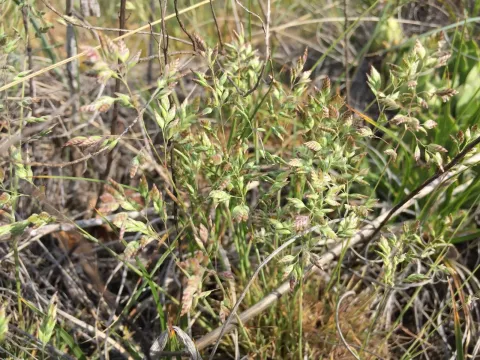
Poa perconcinna
Poa perconcinna
Poa perconcinna is a perennial herbaceous plant belonging to the Poaceae family. In its natural environment, this species is most commonly found in the high-altitude mountain regions of Central Asia, specifically within the Pamir and Tian Shan mountain ranges.
What the section contains
Poa perconcinna
Sowing times for this crop depend on the specific climatic zone; however, early spring sowing is highly recommended when the soil is saturated with moisture after snowmelt. Winter sowing is also permissible in regions with mild winters to stimulate early germination of the seeds.
The seeds of Poa perconcinna exhibit high germination energy when planted at an optimal depth, which typically ranges from 1 to 2 centimeters. It is essential to ensure good seed-to-soil contact by rolling the field to prevent the surface layer from drying out.
Seeding rates are calculated based on the purity and viability of the seed material, as well as the soil type. On lighter substrates, it is recommended to slightly increase the seeding rate to ensure the formation of a dense canopy during the first year of growth.
The culture is characterized by slow development in the first months after emergence, making weed control at the early stages critical. The application of selective herbicides is generally possible only after the plants have reached the tillering phase.
Poa perconcinna has high requirements for soil aeration and thrives in the rocky substrates typical of high-altitude areas. The plant prefers moderately moist conditions but possesses significant drought tolerance during periods of summer peak temperatures.
Neutral or slightly alkaline soils are considered optimal for the normal development of this crop. High humus content facilitates faster regrowth of vegetative mass, which is crucial for utilizing the plant as a hay and pasture crop.
The plant is well-adapted to daily temperature fluctuations typical of mountain regions. It is capable of withstanding prolonged periods of cold, which allows for the expansion of its use into northern or alpine areas where other grass species might struggle with winterkill.
The demand for mineral nutrition is most pronounced during the stem elongation phase. During this period, the application of nitrogen fertilizers significantly increases not only green mass yields but also the nutritional value of the forage.
The plant is light-loving; therefore, sowing in shaded areas or under tree canopies is not recommended. Excessive shade leads to a sharp decline in tillering and premature death of the lower leaves, which compromises forage quality.
The agricultural use of Poa perconcinna is focused primarily on the establishment of highly productive pastures. The grass is characterized by high leafiness and maintains a tender structure even after the onset of heading, which is highly valued in livestock production.
Average green mass yields can reach 12 to 15 tonnes per hectare under proper management. These figures can vary depending on soil fertility and moisture availability throughout the growing season.
The nutritional value of the plant remains high at all stages of growth, including the seed maturation stage. This makes the crop versatile for both hay harvesting and intensive grazing without significant quality loss.
Yield potential is directly dependent on the frequency of cuts. A recommended usage regime is no more than three cuts per season to allow the root system to accumulate sufficient nutrients for successful overwintering.
Seed productivity for Poa perconcinna is moderate, requiring specific agronomic techniques to improve the yield of viable seeds. Optimal seed harvesting occurs during the wax ripeness phase, when the grains acquire their characteristic color.
Among the primary phytopathological threats for this crop, fungal diseases such as rust and powdery mildew are prominent. These pathogens develop actively under conditions of high humidity and stagnant air within dense stands.
To manage diseases, it is recommended to adhere to proper seeding rates and spatial isolation from infection sources. Proactive thinning of the stand helps significantly reduce the risk of fungal disease outbreaks.
The most dangerous pests include cereal flies and cereal bugs that damage stems during the initial growth phase. Infestations by weevils can also occur, which may reduce germination rates and weaken plants during drought years.
Management strategies include integrated protection: timely application of insecticides during critical growth stages and the use of high-quality treated seed material before establishing new fields.
Overall, the crop possesses a natural immunity to many common cereal pests, making it a promising candidate for ecologically oriented agriculture with minimal pesticide use.