
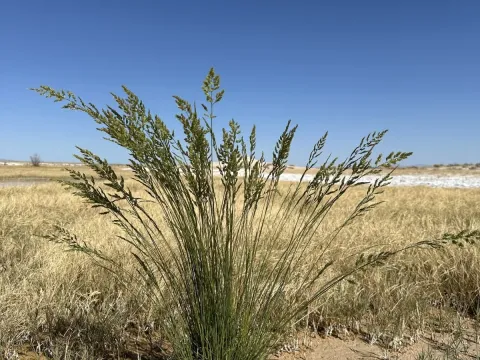
Poa juncifolia
Poa juncifolia
Sowing of Poa juncifolia is optimally performed in early spring to leverage residual soil moisture. In regions with milder climates, late autumn sowing can also be successful to ensure early spring germination.
What the section contains
Poa juncifolia
The seeding rate typically ranges from 8 to 12 kg per hectare, depending on soil preparation and seed purity. Shallow seeding, approximately 1–2 cm deep, is essential for adequate germination.
Integrating this grass into mixtures with legumes enhances the overall nutritional profile of the hay and improves long-term soil fertility. This practice is widely recommended for sustainable grassland management.
Post-sowing rolling is a critical step to ensure good soil-to-seed contact. This procedure prevents wind erosion of seeds and promotes uniform seedling emergence across the field.
Since the initial growth rate is relatively slow, proactive weed control is necessary during the establishment phase. Proper management ensures that the crop develops a strong root system before winter.
Poa juncifolia, commonly known as alkali bluegrass, is a hardy perennial belonging to the Poaceae family. It is highly valued for its ability to thrive in harsh, challenging environments.
This grass is exceptionally tolerant of saline soils and prolonged drought conditions. Its deep and expansive root system makes it an excellent candidate for stabilizing degraded or arid landscapes.
The species prefers well-drained soils but demonstrates remarkable plasticity in various soil types. It is particularly well-adapted to regions experiencing extreme temperature fluctuations throughout the year.
Optimal growth is typically observed in neutral to slightly alkaline soil environments. Waterlogging should be avoided, as it can hinder root health and reduce the vigor of the plant.
Being a heliophilous species, it requires full sun exposure to maintain high productivity. Shaded areas significantly decrease the density of the stand and overall biomass production.
The yield of Poa juncifolia is dictated by seasonal precipitation and soil nutrient availability. Under managed conditions, it provides a stable and reliable source of forage for livestock.
Average hay yields typically range from 2 to 3.5 tons per hectare. While it may not be as high-yielding as intensive annual crops, its longevity and persistence provide long-term economic benefits.
The nutritional value remains high if harvested at the correct phenological stage. The forage is palatable and nutritious, making it suitable for cattle, sheep, and other grazing animals.
Strategic nitrogen fertilization at the start of the growing season can boost biomass production and improve regrowth rates after harvesting. This is key for maximizing output in pasture systems.
Its persistence allows it to form a dense, sod-forming cover that protects the soil from erosion and helps maintain the productive capacity of grazing lands over multiple years.
Poa juncifolia is generally robust, possessing strong natural resistance to many common fungal and bacterial diseases. However, management is still needed to maintain stand health.
Rust diseases may occur under conditions of excessive humidity and poor airflow within the stand. Proper spacing and avoiding over-irrigation are the best preventative measures against such infections.
Pests such as grass bugs and aphids can cause damage during the vegetative stage. Regular monitoring of the field allows for early detection and targeted intervention if thresholds are exceeded.
Cultural practices, such as maintaining an optimal density and adhering to balanced fertilization, significantly reduce the susceptibility of the crop to pest infestations.
Ensuring that only high-quality, certified seeds are used for sowing prevents the introduction of soil-borne pathogens, contributing to a healthier and more productive field from the start.
Harvesting for high-quality hay should be conducted at the early flowering or boot stage. This ensures a peak concentration of proteins and minerals before the plant lignifies.
Cutting height should be maintained at 5–7 cm above the ground. This preserves the basal nodes, which are vital for rapid regrowth and stand recovery after a mowing event.
After cutting, the biomass should be dried in windrows. Proper moisture management—aiming for roughly 15-17% moisture content—is essential to prevent mold growth during storage.
For seed production, harvesting is timed to coincide with the browning of the panicles. Swathing is often used to minimize shattering losses and ensure high-quality seed collection.
Post-harvest cleaning and proper drying are necessary to maintain seed viability. Well-stored seeds can retain high germination percentages for several years in cool, dry conditions.