
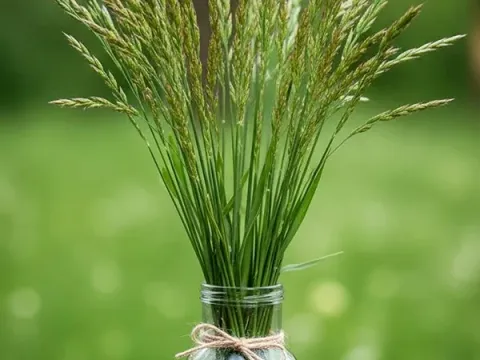
Festulolium
Festuca hybrids
Festulolium is an intergeneric hybrid resulting from crosses between Fescue (Festuca) and Ryegrass (Lolium) species. It belongs to the Poaceae family. This crop was developed to combine the high yields and nutritional value of ryegrass with the stress tolerance and longevity of fescue.
What the section contains
Festulolium
Sowing should ideally take place in early spring once soil temperatures reach 5-8 degrees Celsius. Autumn seeding is also practiced in many regions to allow the grass to establish a robust root system before the onset of extreme winter temperatures.
Seeding rates typically range from 15 to 25 kilograms per hectare, depending on whether it is planted in a pure stand or as part of a seed mixture. Uniform seed distribution is critical for achieving a dense and competitive sward.
A sowing depth of 1.5 to 2 centimeters is optimal. This depth ensures that the seed maintains sufficient contact with soil moisture while having enough energy to emerge through the soil surface without depleting its reserves.
Post-sowing rolling is a recommended practice to ensure firm contact between seeds and the soil. This measure improves capillary moisture movement, which is particularly beneficial during dry spring weather, ensuring uniform germination.
Festulolium is highly adaptable to various soil types, performing best on fertile loam or sandy loam soils. It shows excellent performance in soils with neutral to slightly acidic pH levels, reflecting its versatile nature.
The crop is known for its superior winter hardiness compared to ryegrass, allowing it to thrive in colder climates. Furthermore, it exhibits good tolerance to temporary flooding and waterlogged conditions, making it suitable for lowland areas.
Nutrient management is essential, with a particular focus on nitrogen, which significantly boosts vegetative growth after each cut. Balanced applications of phosphorus and potassium are crucial for developing deep, vigorous root systems.
Festulolium is a persistent perennial that can remain productive for 5 to 8 years under good management. Its high persistence makes it an excellent choice for long-term pasture improvement and intensive forage production systems.
In addition to its productivity, the crop demonstrates high drought tolerance during the summer months due to the deeper rooting characteristics inherited from its fescue parentage, ensuring steady growth even in challenging periods.
Yield performance is one of the primary advantages of festulolium. It consistently outperforms traditional grasses by producing a high volume of dry matter per hectare across multiple cuts during the growing season.
With intensive management, farmers can expect 3 to 4 cuts per year. The high sugar content in its biomass makes it an excellent candidate for ensiling, leading to high-quality winter feed that supports animal productivity.
Annual dry matter yields can reach 10–14 tons per hectare under ideal conditions. Maximizing these yields requires a commitment to fertilization schedules and proper timing of harvest, preventing the plants from over-maturing.
The high protein digestibility of the biomass makes it a preferred feed for dairy and beef cattle. This nutritional profile helps farmers reduce the need for expensive feed supplements during winter months.
Regrowth capacity is a standout trait of this hybrid. After each mechanical cut or grazing cycle, the grass recovers quickly, provided that the soil moisture levels and nutrient availability remain within an optimal range.
Common diseases include rust and leaf spot, particularly during seasons with high humidity. Proper management, including timely cutting and avoiding excessive plant density, helps maintain airflow and reduces disease risk.
Root rot issues can occur if the site has poor drainage. Ensuring good soil aeration and avoiding water stagnation in the field are primary preventative steps to maintain the long-term health of the stand.
Pests such as aphids, stem borers, and various leafhoppers can damage young shoots. Monitoring for early signs of infestation is recommended, with insecticide applications reserved for high-pressure scenarios that threaten yield.
Competition from weeds is most significant in the establishment year. Once the festulolium has developed a dense, deep-rooted sod, it effectively suppresses most invasive weed species without needing chemical intervention.
Sourcing high-quality, treated seed is the first line of defense against soil-borne pathogens. Establishing a vigorous stand early on is the best strategy to minimize the impact of biological threats throughout the crop's lifecycle.
Harvesting for hay should ideally occur at the heading stage to balance total yield with nutritional content. Delaying the harvest leads to an increase in fiber, which reduces overall forage quality for livestock.
For silage or haylage, harvest timing is even more critical. Cutting the crop while the stems are still tender ensures that the final product retains high energy levels and digestibility for the target animals.
A cutting height of at least 5–7 centimeters is recommended. This leaves sufficient vegetative tissue for the plant to recover quickly, ensuring that the next growth cycle can begin immediately without stress.
Using modern mower-conditioners can significantly reduce field curing time, which helps preserve the essential nutrients and vibrant green color of the forage, resulting in a higher feed grade.
At the end of the season, it is important to avoid extremely low final cuts, as this can expose the crown of the plant to frost damage, potentially impacting the stand's survival and productivity in the following spring.