
Festulolium
Lolium elongatum
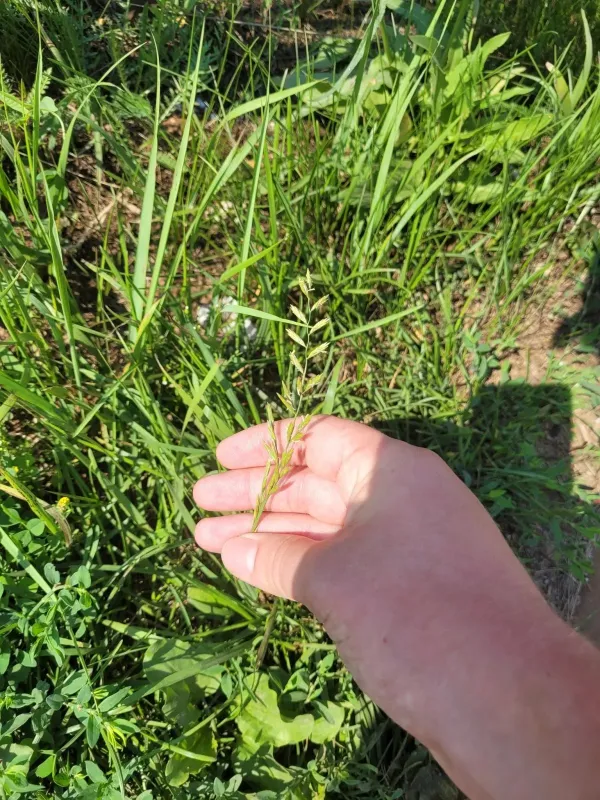
Description
Sowing dates
Festulolium is an intergeneric hybrid derived from the crossbreeding of fescue (Festuca) and ryegrass (Lolium). It belongs to the Poaceae family and combines the high productivity and nutritional value of ryegrass with the drought resistance and winter hardiness of fescue.
Sowing should be carried out at the optimal early stages in spring or late summer to allow plants to establish well before adverse weather conditions occur. In temperate climates, an August sowing is preferred, as the soil provides sufficient moisture for uniform germination.
The seeding rate depends on soil type and management goals, typically ranging from 15 to 20 kg per hectare for hay production. When overseeding into sparse stands, the rate can be reduced, but ensuring good seed-to-soil contact is critical to improve germination energy.
Seed depth should not exceed 1.5–2 cm, as Festulolium seeds are relatively small. Surface sowing often leads to seedling desiccation, while planting too deep hinders emergence through the soil crust.
After sowing, fields should be rolled to level the surface and retain moisture in the root zone. Effective seed-to-soil contact significantly increases field emergence and ensures uniform development of the grass stand in the first year of life.
Growing requirements
The crop has high requirements for soil fertility and mineral nutrient availability. Festulolium performs best in loamy and sandy loam soils with a neutral or slightly acidic reaction, avoiding excessively waterlogged or very dry sandy areas.
The plant responds strongly to nitrogen fertilizer applications, which stimulate regrowth after mowing. The efficiency of fertilizer use depends directly on moisture availability; therefore, productivity is multiplied in irrigated lands.
The climatic plasticity of Festulolium allows it to successfully tolerate both temporary droughts and excessive moisture in spring. However, the crop is sensitive to extreme winter temperatures without snow cover, making the choice of adapted varieties critical.
Good light intensity is required for normal growth, so sowing under shade-producing companion crops is not recommended. Its developed root system allows for efficient nutrient uptake, although yields drop sharply in acidified soils.
In crop rotation, Festulolium is valued as an excellent predecessor for cereal crops due to its ability to enrich the soil with organic matter and improve soil structure. The optimal operational lifespan of a field is 4 to 6 years, provided mowing regimes are followed.
Yield
The green mass yield of Festulolium significantly exceeds that of most traditional forage grasses, reaching up to 50–70 tons per hectare in favorable years. Dry matter content also remains consistently high throughout the active growth period.
The nutritional value is characterized by a high content of easily digestible carbohydrates and crude protein. This makes hay and silage from Festulolium an indispensable part of high-yielding dairy cattle diets, contributing to increased milk production.
High regrowth intensity after mowing allows for 3–4 full cuts per growing season, provided there is sufficient irrigation. It is essential to maintain a balance between mowing frequency and cutting height to prevent plant depletion.
Yield stability is maintained even under unfavorable weather conditions, where pure ryegrass stands might suffer a significant decline in productivity. This makes the crop an important insurance component of the forage base in risky agricultural zones.
To achieve maximum biological productivity, timely fertilization after each use cycle is necessary. Without fertilizer inputs, yields in subsequent years inevitably decrease due to the removal of nutrients with the harvested biomass.
Main diseases and pests
Typical diseases for Festulolium include various types of rust that affect leaf blades during periods of high humidity and moderate temperatures. Prevention involves choosing disease-resistant varieties and maintaining optimal stand density.
Powdery mildew can occur in dense stands with poor air circulation, leading to premature leaf yellowing. Controlling the disease relies on timely mowing and maintaining good agronomic hygiene in the fields.
Among pests, cereal flies pose the greatest risk, damaging stems and the root systems of young plants. Monitoring pest populations during early growth stages helps avoid critical losses in stand density.
Aphids can infest ears and upper leaves, sucking sap and reducing the overall nutritional value of the forage. In cases of mass outbreaks, early mowing is an effective method to interrupt their life cycle.
Adhering to crop rotation and avoiding continuous monocropping on the same site minimizes the accumulation of specific soil pathogens. Fungicide treatments in commercial seed production are applied only when economic damage thresholds are reached.
Harvesting
Harvest timing depends on the intended forage type, with the beginning of heading being the optimal phase. During this period, the best balance between biomass volume and nutritional value for livestock is achieved.
Mowing is recommended at a height of 5–7 cm to preserve growing points and ensure rapid regrowth of aftermath. Cutting too low can weaken the plants and lead to thinning during the winter period.
For hay production, it is important to ensure rapid drying of the cut mass by using tedding to accelerate moisture evaporation. The high sugar content of the grass requires careful handling to avoid nutrient losses during field drying.
When producing silage or haylage, technology for compaction and sealing must be strictly followed, as Festulolium has high moisture retention. Adding preservatives helps improve fermentation and increases forage storage stability.
The final cut should be made no later than 30–40 days before the first hard frost so that plants can accumulate enough sugars in their roots. This ensures successful overwintering and vigorous regrowth in the upcoming season.