
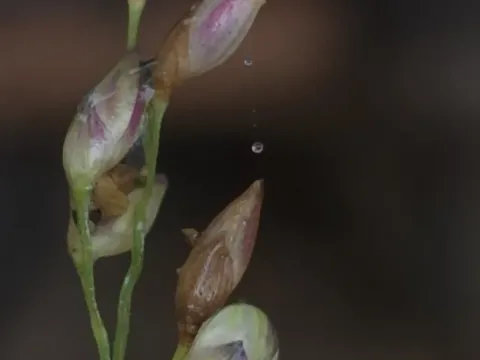
Shining millet
Panicum fulgidum
Shining millet (Panicum fulgidum) is a member of the Poaceae family. As a warm-season crop, its sowing timing is strictly dictated by soil temperature indicators.
What the section contains
Shining millet
Field operations should begin only when the soil at a depth of 5–10 cm reaches a steady temperature of at least +12...+15°C to ensure uniform germination.
Planting too early into cold, wet soil significantly increases the risk of seed decay and early-season pathogen attacks that can devastate crop density.
In temperate climates, the ideal sowing window usually falls in mid-to-late May, ensuring that the seedlings avoid the risk of late spring frosts.
Seed placement depth generally ranges from 3 to 5 cm, adjusted according to the soil moisture levels and the specific mechanical composition of the field.
This crop thrives in environments with high light intensity, requiring full sun exposure throughout the vegetative stage to reach its maximum yield potential.
Shining millet performs best in well-drained, fertile loam soils that offer both excellent aeration and consistent moisture retention capabilities during the growing season.
Water availability is a critical factor, especially during the booting and flowering stages, where moisture stress can lead to significant kernel abortion.
While the crop shows some inherent drought tolerance compared to other cereals, sustained irrigation or timely rainfall is necessary for high-quality grain production.
Nutrient management must be precise; excessive nitrogen often leads to lodging and maturity delays, which complicates harvest and reduces overall grain quality.
Yield performance is highly correlated with the adherence to specific agronomic practices and the precision of the seeding rate used during planting.
Proper weed control is essential in the early stages, as the crop is relatively slow to canopy and can easily be outcompeted by aggressive weeds.
The ability of the crop to tiller is a major determinant of productivity, and management strategies should support optimal stem development without overcrowding.
In professional farming settings, yield is measured by the total weight of mature grain, heavily influenced by the weight of a thousand kernels.
Favorable weather patterns during the late-stage grain-filling period are crucial to maximizing the final harvest weight and nutritional content of the yield.
Smut diseases are the most significant biological threats to this crop, necessitating the use of certified, fungicide-treated seeds to ensure field health.
Environmental conditions characterized by high humidity can trigger rust and mildew infections, which reduce leaf surface area and impair photosynthetic activity.
Insect pests, such as the millet stem borer and various aphid species, can cause severe structural damage to the plants, often requiring targeted insecticide interventions.
- Millet midge causing empty grains.
- Root rot pathogens in waterlogged soils.
- Stem borer larvae affecting structural integrity.
Integrated pest management, including regular field scouting and rotation strategies, is the most effective way to protect the crop against major outbreaks.
Harvesting is typically conducted at the stage of physiological maturity, identified by the change in color of the panicles and reduced grain moisture levels.
Direct combining is the preferred method for modern farming, provided the field is free of heavy weed infestation that could clog the harvesting equipment.
Precision in combine settings, particularly cylinder speed and air adjustment, is required to prevent grain cracking and excessive mechanical loss during the process.
Timing is of the essence, as waiting too long after maturity can lead to shattering, where the seeds fall from the panicles due to wind or vibration.
Post-harvest logistics involve immediate drying and cleaning to remove debris, ensuring the moisture content is low enough to prevent mold during long-term storage.