
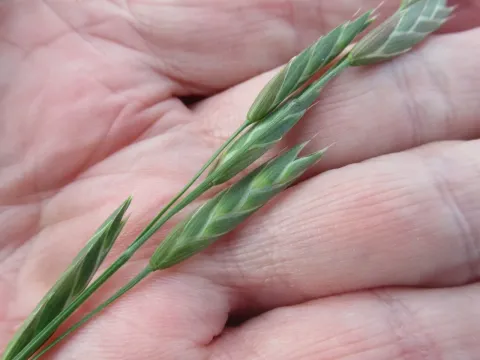
Short brome
Bromus brevis
Short brome (Bromus brevis) is a member of the Poaceae family. It is a productive grass species valued for its rapid growth rate, which allows it to establish a strong forage stand very quickly after seeding.
What the section contains
Short brome
The ideal time for sowing is during early spring when the soil has sufficiently warmed and reached physical ripeness. In regions with milder climates, late autumn sowing is also a viable option to ensure early spring regrowth.
The recommended seeding rate is typically between 15 to 22 kilograms per hectare, depending on the desired density of the sward and the soil type. Precision drilling is preferred to ensure uniform distribution.
Sowing depth should be kept between 2 and 3 centimeters. Proper soil-to-seed contact is essential for uniform germination, especially in drier environments where moisture retention is critical for early establishment.
Short brome is characterized by excellent tillering ability. This competitive growth habit helps the crop establish dominance over weeds, reducing the need for intensive herbicide interventions during the first year.
This crop thrives in fertile loamy and silt-loam soils that are rich in organic matter. While it is adaptable, its biomass productivity is significantly higher when grown on neutral pH soils with good nutrient availability.
Short brome requires moderate to high levels of soil moisture during its active growth phases. While it can withstand short periods of drought, it does not perform well in waterlogged or swampy conditions.
Well-drained soil is a primary requirement for the long-term viability of the stand. Poor drainage can lead to root rot and a drastic reduction in the population density of the grass over time.
Light availability is crucial for optimal growth. It is not suitable for intercropping under dense canopies of other crops, as it requires full exposure to sunlight to reach its full productive potential.
Fertilization management, particularly with nitrogen, is key to sustained yields. Split applications of nitrogen, applied early in the spring and immediately after each cutting, help maintain constant high production.
Under optimal agronomic conditions, Short brome can produce significant amounts of green forage, with yields reaching 25–30 tonnes per hectare. Productivity is strongly correlated with the fertility level of the site.
The crop is highly productive for the first 3 to 5 years, after which a decline in biomass may occur. Regular crop rotation and proper soil management are necessary to maintain its high output over time.
The feed quality is exceptional, provided it is harvested at the right phenological stage. Early harvesting ensures high protein content and digestibility, making it an excellent source of nutrition for cattle.
Forage yield can be further optimized through strategic irrigation in regions where rainfall is insufficient during the late spring. Even minor irrigation boosts the second cut significantly.
Seed production is a lucrative secondary objective for many farmers. By leaving a portion of the stand for seed, one can obtain high-quality planting material, provided the timing is managed correctly.
Like many grasses, Short brome can be susceptible to fungal diseases such as rusts and smuts. These are more prevalent in seasons characterized by high humidity and poor air circulation within the stand.
Pests like aphids and certain cereal flies can cause damage to the foliage and stems. Monitoring the crop during the vegetative stage is essential for identifying pest pressure early and taking action.
Root rot and crown diseases are more common when the crop is planted in compacted soils. Improving soil structure through proper mechanical tillage helps reduce these biological risks significantly.
To maintain a healthy stand, it is important to practice integrated pest management. This includes rotating crops, using resistant varieties, and avoiding excessive nitrogen applications that make plants more vulnerable.
- Monitor fields for early signs of disease.
- Ensure proper spacing to allow for good airflow.
- Use certified, disease-free seed for sowing.
- Remove harvest residues to prevent pathogen buildup.
For high-quality hay or green feed, harvesting should occur during the boot or early heading stage. Harvesting later results in a significant loss of nutritional value as the plant matures and lignifies.
When producing silage, the material should be chopped into small pieces to facilitate effective fermentation. Proper compaction in the silo is critical to prevent spoilage from aerobic bacteria.
Speed is essential during the hay-making process. The use of mowers with conditioners allows the crop to dry more rapidly, preserving its green color and nutrient profile even in variable weather.
Seed harvesting requires precision. It should be conducted once the seeds are fully developed but before they reach the point of natural dispersal to minimize field losses.
Post-harvest handling of seed includes thorough cleaning and drying to reach a moisture content of approximately 13%. This ensures the longevity of the seeds in storage and guarantees high germination rates.