
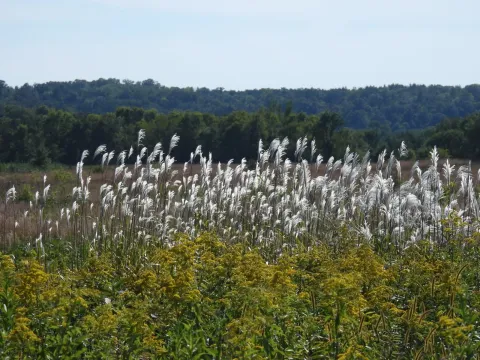
Amur silver grass
Miscanthus sacchariflorus
Miscanthus sacchariflorus is a perennial rhizomatous grass, and because of its low seed viability, vegetative propagation is the standard agricultural practice. Farmers typically plant rhizome segments or nursery-grown seedlings to establish new plantations efficiently.
What the section contains
Amur silver grass
The ideal time for planting is early spring, once soil temperatures reach 10-12 degrees Celsius. Ensuring that planting is completed before the onset of summer drought is crucial, as the rhizomes need a reliable supply of moisture to establish a strong root system during their first weeks.
Site preparation involves deep plowing and intensive weed control. During the first year, young plants are highly sensitive to competition for sunlight and nutrients, so maintaining a clean field is vital to ensure high survival rates and uniform stand density.
Planting density generally ranges from 10,000 to 20,000 units per hectare, allowing the crop to form a dense canopy by the third year. Mechanical planters are often used to maintain consistent depth, usually between 5 and 10 centimeters, depending on the soil structure.
Following successful establishment, the rhizome network expands rapidly, allowing the plant to naturally outcompete weeds in subsequent years. A well-managed plantation reaches its full productive potential by the fourth growing season, requiring minimal intervention thereafter.
This crop prefers well-drained, fertile loamy or sandy soils with a neutral or slightly acidic pH. While Miscanthus sacchariflorus is remarkably adaptable, it thrives in moderate moisture conditions and should not be grown in waterlogged areas to prevent root decay.
As a C4 photosynthetic plant, it thrives in regions with high solar radiation and adequate summer rainfall. It is heat-tolerant during the growing season and displays sufficient winter hardiness once established, making it suitable for temperate climates.
Nutrient requirements are relatively moderate, although nitrogen application in the early stages helps accelerate canopy closure and biomass development. Potassium and phosphorus are applied based on soil fertility tests prior to the establishment of the plantation.
The plant demonstrates high efficiency in nutrient utilization and storage within its rhizomes, allowing it to recover quickly every spring. This low-input requirement makes it an economically viable alternative to traditional grain crops for marginal or energy-dedicated lands.
Maximum light exposure is critical throughout the growing season to ensure optimal carbon sequestration and biomass accumulation. Choosing a location without shading from trees or windbreaks will maximize the yield of dry matter per hectare.
Yields of Amur silver grass increase steadily during the first few years, stabilizing once the plantation reaches maturity at age four. In optimal conditions, annual dry biomass yields can reach 15-25 tonnes per hectare, depending on local climate and soil health.
The biomass is characterized by high cellulose content and low moisture at the time of harvest, making it an excellent feedstock for energy production. It is widely used in the form of pellets or briquettes for combustion in industrial and residential boilers.
Beyond energy use, the fiber is highly valued in the paper, pulp, and construction industries for producing high-quality panels and bio-plastics. Its durability and chemical consistency make it a versatile material for various industrial manufacturing processes.
A single plantation can be productive for 15 to 20 years, making it a highly sustainable investment compared to annual crops. The lack of annual soil tillage helps improve soil structure and organic matter content over the life of the field.
Predictable yield patterns allow for efficient supply chain management, enabling farmers to enter long-term contracts with processing facilities. Low operational costs after the initial establishment phase contribute to the overall profitability of the enterprise.
Miscanthus sacchariflorus is recognized for its high natural resistance to pests and diseases, which significantly reduces the need for synthetic chemical inputs. This ecological robustness makes it an ideal candidate for environmentally conscious and organic farming systems.
Leaf rust can occasionally appear under conditions of excessive humidity or extremely high plant density. Improving air circulation through proper spacing and regular monitoring usually suffices to manage these minor pathological risks without widespread chemical application.
Pests, such as soil-dwelling larvae, may pose a risk to young rhizomes during the first year of establishment. However, as the plant matures and the rhizomes become more lignified, they become unappealing to most common agricultural pests.
Rodents can cause localized damage in winter, necessitating field hygiene to remove weeds that provide shelter. Monitoring field borders for rodent activity is a standard and effective preventive measure for large-scale plantations.
Because there are no major epidemic threats to the crop, Miscanthus remains a reliable and low-maintenance choice for large-scale energy farming. Regular field inspections in early spring are usually sufficient to maintain healthy and productive stands.
Harvesting takes place annually during late winter or early spring when the stems have naturally dried down to 15-20% moisture. This natural drying process eliminates the need for expensive artificial mechanical drying before processing.
Forage harvesters equipped with specialized headers are typically used to mow and chop the biomass in one pass. Maintaining the correct cutting height—about 5-10 centimeters—is essential to protect the underground buds that will initiate growth in the next season.
The harvested material is compressed into bales for easy storage and transportation. Bales can be safely stored on dry land under covers, ensuring that the biomass remains in prime condition for processing throughout the year.
Timely harvesting is critical; delaying it beyond the start of spring growth can damage the plant's resources and reduce subsequent year's yield. A precise operational window ensures that the plantation remains vigorous and highly productive for decades.
Effective logistics between the field and the processing site are key to maintaining low costs and high margins. Positioning the crop near processing facilities minimizes transportation expenses and maximizes the overall efficiency of the renewable energy supply chain.