
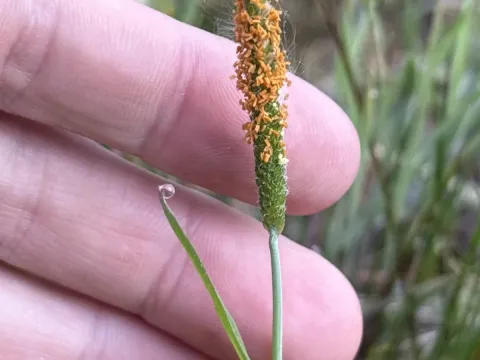
Amur foxtail
Alopecurus amurensis
Amur foxtail (Alopecurus amurensis) is a perennial grass species belonging to the Poaceae family. It is recognized for its high adaptability and robust growth patterns, making it a valuable candidate for forage production in specific climatic zones.
What the section contains
Amur foxtail
The plant is native to regions with sufficient moisture and is particularly well-suited for floodplains and low-lying meadow areas. It displays a remarkable ability to withstand spring flooding, which would be detrimental to many other crop types.
Regarding soil requirements, Amur foxtail thrives in fertile, moisture-retentive soils. It is highly responsive to nitrogen fertilization, which is essential to maximize the biomass yield during the growing season.
Botanically, it is characterized by its distinct spike-like inflorescence, resembling a fox's tail. The grass exhibits early spring development, offering a valuable source of early-season nutrition for livestock before other species mature.
Winter hardiness is one of the key strengths of this species. It has evolved to survive severe cold, maintaining its potential for rapid growth as soon as temperatures permit in the spring.
The primary use of Amur foxtail is in the establishment of permanent hay meadows and pastures. Its nutritional profile makes it a high-quality forage source, offering a good balance of protein and essential minerals.
Yield capacity is highly dependent on moisture levels. When conditions are optimal, the crop is capable of producing multiple cuts per season, providing a steady supply of green fodder throughout the summer.
Hay derived from this grass is highly palatable to ruminants, including cattle and sheep. It serves as a reliable winter feed, maintaining animal health and productivity due to its excellent digestibility.
The grass is also effective for silage production, provided it is harvested at the peak of its vegetative stage. Proper moisture management during the harvest cycle is critical to ensuring high-quality silage preservation.
Amur foxtail contributes to soil stability and organic matter accumulation. Its extensive root network prevents erosion and improves soil structure, making it a sustainable choice for long-term grassland management.
Like most forage grasses, it can be susceptible to fungal diseases such as rust and powdery mildew, especially under high humidity or poor ventilation conditions. Implementing balanced density helps to reduce these risks significantly.
Common insect pests include various species of cereal flies and aphids, which can impair biomass accumulation. Regular monitoring and the use of integrated pest management practices are recommended to protect the vigor of the stand.