
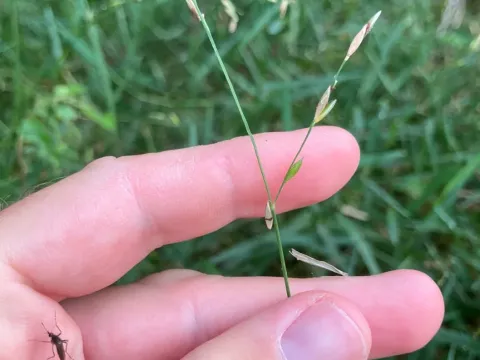
Amphicarpum
Amphicarpum
Amphicarpum species, such as Amphicarpum purshii, are warm-season annual grasses that thrive when planted in late spring. The soil temperature should reach at least 15 to 20 degrees Celsius to ensure rapid and uniform germination.
What the section contains


Amphicarpum
The optimal sowing window typically spans from late May to mid-June. Planting in cooler, wetter conditions often results in poor stand establishment due to the risk of seed decay and fungal pathogens in the soil.
Seeding rates should be calibrated carefully to account for the unique growth habit of the plant. A density of 10-15 kilograms per hectare is standard, provided the soil is well-prepared to encourage root development.
For best results, seeds should be sown at a depth of 2 to 3 centimeters. Proper soil-to-seed contact is essential, and light rolling after sowing helps optimize the moisture conditions for the emerging seedlings.
Row spacing of 30 to 45 centimeters is recommended to allow adequate airflow and sunlight penetration. This spacing is also beneficial for mechanical weed control during the early stages of growth.
Amphicarpum is well-adapted to light-textured soils, including sands and loamy sands. These soils are ideal because they allow the plant to easily develop its subterranean shoots and underground spikelets.
The crop shows remarkable resilience to drought, although consistent moisture levels during the peak growing phase significantly boost biomass production. Waterlogged soils should be avoided as they inhibit healthy development.
Soil pH preference is generally in the slightly acidic to neutral range. Highly alkaline soils may hinder growth and reduce the plant's ability to produce viable seeds in its underground spikelets.
Amphicarpum requires full sun to achieve its maximum potential. Even partial shading during the day can significantly lower the reproductive success of the aerial panicles and reduce the total harvestable biomass.
Fertility requirements are relatively modest, though moderate levels of phosphorus and potassium are essential for root health and the successful development of underground seeds, which contain high energy stores.
The yield of Amphicarpum is unique because it produces both aerial and subterranean seeds. The aerial seeds are typically gathered through standard harvesting methods, while the underground seeds remain in the soil.
Forage yield can be substantial, often ranging from 15 to 20 metric tons of green matter per hectare. The nutritional value is high, making it a viable alternative for high-quality silage or hay production.
The subterranean seeds are notably larger and richer in nutrients than the aerial ones. They act as a survival mechanism and a secondary harvestable asset if special extraction techniques are employed.
Self-regeneration is a key yield feature of this crop. Since many seeds remain in the soil, the plant can effectively re-establish itself in pasture settings, reducing the need for annual replanting.
Future potential lies in selective breeding to increase the proportion of aerial seeds. This would simplify harvesting and make Amphicarpum more compatible with modern, large-scale commercial farming equipment.
Soil-dwelling pests, such as white grubs and wireworms, are the primary threat to the underground parts of the plant. These organisms can consume or damage the subterranean seeds before they are fully mature.
Root rots, particularly Fusarium species, can be problematic in heavy or overly wet soils. Seed treatment with appropriate fungicides is strongly recommended as a preventative measure before planting.
Weed competition is the most significant challenge in the first few weeks after emergence. Because the seedlings are relatively slow to establish, proactive weed management is required to prevent yield loss.
Foliar diseases, including various rusts and leaf spots, may appear during humid weather. Monitoring the field and applying fungicides only when thresholds are exceeded helps keep the crop healthy.
Aphids and other sap-sucking insects can act as vectors for viral diseases. Maintaining a healthy field and avoiding excessive nitrogen applications can help minimize the attractiveness of the crop to these pests.
Harvesting the aerial portion of Amphicarpum is performed when the panicles reach maturity. Combines should be adjusted for small seeds to minimize losses due to shattering, as the seeds are easily detached.
Subterranean seeds are usually left in the soil to support natural reseeding in pasture systems. If subterranean collection is required, modified digging equipment used for root crops is necessary.
Immediate post-harvest drying is crucial for aerial seeds. They should be dried to a moisture content of approximately 12-14% to ensure long-term stability and prevent molding during storage.
Forage harvest should take place before the seed-shattering stage to ensure high nutrient quality in the hay. Properly cured hay maintains its protein levels well throughout the winter storage period.
Storage of the cleaned seeds should occur in a cool, dry environment. Due to the hard seed coats, these seeds are durable and can maintain high viability for several years if protected from rodents and dampness.