
Eustachys
Eustachys Desv.
The genus Eustachys (family Poaceae) comprises various perennial or annual grass species. These plants are primarily native to tropical and subtropical regions of the Americas and Africa, where they have adapted to diverse environments.
What the section contains
Eustachys
The crop requires warm temperatures and ample sunlight to achieve optimal biomass production. It is highly valued in agriculture for its significant drought tolerance, allowing it to thrive in climates where rainfall is irregular or scarce throughout the growing season.
Regarding soil conditions, Eustachys prefers well-drained, sandy, or loamy substrates. It is essential to ensure that planting sites do not suffer from waterlogging, as the roots are sensitive to anaerobic conditions caused by stagnant water in the soil profile.
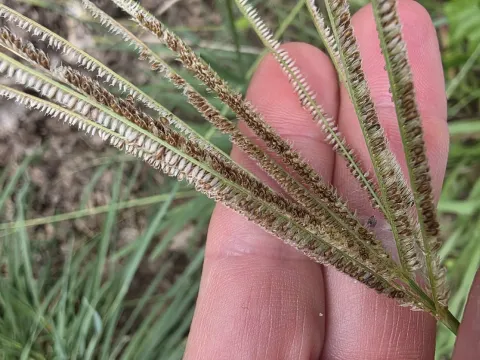
Botanically, the genus is distinguished by its inflorescences, which consist of palmately arranged spikes. The leaves are typically narrow, linear, and relatively coarse, which helps the plant withstand grazing pressure and mechanical stress in natural or managed pastures.
In terms of agricultural utility, Eustachys is primarily used for livestock grazing. Its ability to regenerate after grazing makes it a useful component in pasture management systems in arid and semi-arid regions where conventional forage grasses might fail.
The main phytosanitary risks for Eustachys include fungal diseases such as leaf rusts, which can spread rapidly during periods of high humidity. Such infections negatively impact the total yield and the nutritional quality of the forage provided to livestock.
Insect pests, including various types of aphids and mites, can occasionally reach infestation levels that require chemical or biological control. Maintaining optimal plant density and monitoring for early signs of damage are critical for successful management.